
 Svenska
 简体中文
 Deutsch
 English
 Français
 Español
 Nederlands
 Italiano
 日本語
 Polski
 Português
 Русский
 Ελληνικά
 العربية
 Türkçe
Live
Aquarium of the Pacific, Long Beach, Kalifornien
Aquarium of the Pacific, Aquarium Way, Long Beach, Kalifornien, USA
 11.9°C / 53.4°F
 07:0507:05:06
 9.5°C / 49.1°FKlart
 82%
 28 km/h / 17 mph
 06:39
 16:52
Laddar prognos…
Aquarium of the Pacific, Aquarium Way, Long Beach, Kalifornien, USA
11.9°C / 53.4°F
07:05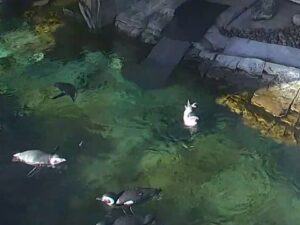
Rainbow Harbor, Long Beach, Kalifornien, USA
11.9°C / 53.4°F
07:05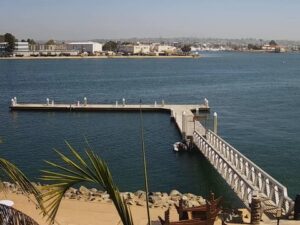
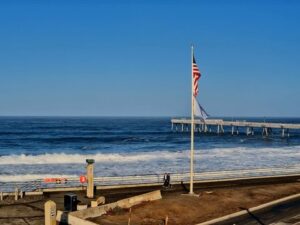
Sharp Park Beach, Pacifica, Kalifornien, USA
 8°C / 46.4°F
07:05
Big Bear Valley rekreations- och parkdistrikt, Park Avenue, Big Bear Lake, Kalifornien, USA
 0.2°C / 32.4°F
07:05
Yosemite Valley, Sierra Nevada, Kalifornien, USA
0.1°C / 32.2°F
07:05
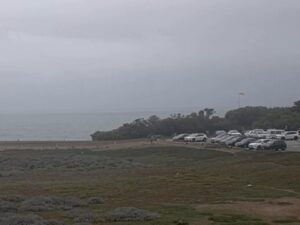
Fort Funston, Golden Gate NRA, California, USA
 7.8°C / 46°F
07:05

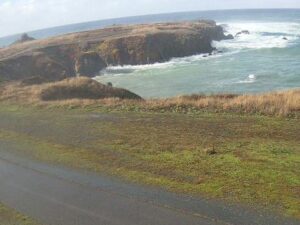
Noyo Headlands Park, Fort Bragg, Kalifornien, USA
5.3°C / 41.5°F
07:05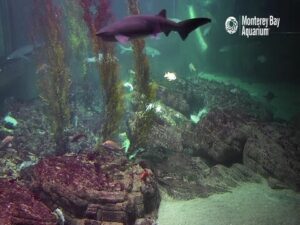
Monterey Bay Aquarium, Cannery Row, Monterey, Kalifornien, USA
7.4°C / 45.3°F
07:05

Knott's Berry Farm, Beach Boulevard, Buena Park, Kalifornien, USA
13.5°C / 56.3°F
07:05
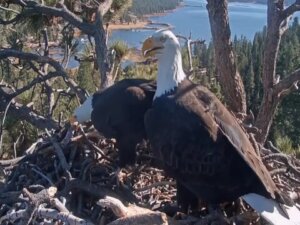
The Channel Islands Bald Eagle Webcam looks straight into a bald eagle nest on Santa Cruz Island, the largest island in California and part of Channel Islands National Park. The main camera sits beside the Fraser Point pair’s nest, a deep platform of sticks built against the trunk of a gnarled, lichen-hung tree, with a dry, scrubby canyon slope behind it. A second tab switches to the Sauces camera, which looks down a brushy canyon to a strip of ocean between two hills. From January to July the camera can follow a whole season, from fresh sticks and eggs to first flights.
Santa Cruz Island runs 35 kilometers (22 miles) from end to end, with Devils Peak rising to 740 meters (2,429 feet). The Nature Conservancy owns the western 76 percent and the National Park Service the eastern 24 percent. Both nests are on the Conservancy’s side: the main one in the territory named after Fraser Point, the island’s western tip, and the second in the Sauces Canyon territory toward the same end. The streams come from explore.org with the Institute for Wildlife Studies, which has led bald eagle restoration on the California Channel Islands for more than 40 years.
Eggshell thinning caused by DDT and other factors ended successful bald eagle nesting on the northern Channel Islands by 1949, and by the 1960s none were left on any of the islands. Between 2002 and 2006 the park and the institute released 61 young eagles from hack towers on Santa Cruz Island. In 2006 a chick hatched at the Pelican Harbor nest, the first to hatch on the islands without human help in more than 50 years. That bird, banded A-49 and named Cruz, is now the female at Fraser Point. Her mate, Andor (A-14), hatched at the island’s Baby’s Harbor nest in 2017, and in 2023 the pair moved to a new nest in a nearby canyon, the one the camera now watches.
Their 2026 season went well: eggs on February 19, 22 and 26, chicks on March 28, March 30 and April 2, and three first flights in June. At Sauces, Jak (A-40) and Audacity (A-48), both produced by captive eagles at the San Francisco Zoo, have a long record of broken eggs, with all eight lost in 2026. In 2025 they raised one chick, Betty Lou, which first flew on May 29.
The institute’s nest records give a clear calendar. The pairs work on their nests from January. Eggs follow from the end of January into early March, usually two or three laid about three days apart, and hatch after five weeks or a little more, between mid-March and mid-April. First flights come between late May and early July.
From late summer into early winter the nest is often empty for long spells, which is normal rather than a camera fault. The adults are not long-distance migrants and generally stay on the island, while the young roam: a 2015 Fraser Point chick was last seen in Ojai on the mainland. Real long-haul travelers do work this coast, among them sooty shearwaters that cross the Pacific from New Zealand to feed off California in the northern summer, a loop traced on our bird migration map.
Santa Cruz Island has a mild marine climate in which frost is rare and snow almost unknown. Ten years of reanalysis data for the island’s western end give average highs of about 16°C (60°F) from December to March, with nights around 10°C to 12°C (50°F to 53°F). Most rain falls from November to March, from about 410 millimeters (16 inches) a year on the shoreline to 640 millimeters (25 inches) on the highest slopes, and totals swing widely between wet and drought years. That wet season is also egg season, so storms can roll through while an eagle incubates.
Spring stays cool, with highs near 17°C (62°F) in April and May while the chicks grow. Summers are dry but often overcast with coastal fog, and the warmest weather comes from August to October, when highs reach about 20°C to 21°C (68°F to 70°F) and nights stay near 15°C to 16°C (59°F to 61°F). By mid-November the hillsides behind the Fraser Point nest are pale and dry.
The Park Service end of the island is open to visitors. Island Packers boats leave Ventura Harbor year-round, and the crossing to the piers at Scorpion Anchorage or Prisoners Harbor takes about an hour. Scorpion Canyon Campground, a flat 800 meters (half a mile) from the landing, has 31 sites and needs a reservation. Scorpion Beach is the place for swimming, snorkeling and diving, and Channel Islands Adventure Company runs guided sea kayak tours east toward Scorpion Rock or west toward Cavern Point, past sea caves. Keep an eye out for the island scrub-jay, which lives only on Santa Cruz Island.
Near Prisoners Harbor is the Del Norte backcountry campsite. Hiking stops at the fence line between Prisoners Harbor and Valley Anchorage, where Nature Conservancy land begins, which puts the eagle nests out of reach for day visitors. Painted Cave, among the largest sea caves in the world, is nearly 400 meters (a quarter mile) long, with an entrance ceiling of 49 meters (160 feet).
More eagle nests and Santa Barbara coast cams to try next:
On the western end of Santa Cruz Island in Santa Barbara County, California, about 44 kilometers (27 miles) south of Santa Barbara across the Santa Barbara Channel.
A close view of the Fraser Point nest, a large stick platform against a gnarled trunk, and on the Sauces tab a wide view down a brushy canyon to the ocean. In season the main camera can show eggs, feedings and growing chicks.
Most likely it is out of season. The pairs start working on the nests around January and their chicks fly between late May and early July. From late summer into early winter the birds can be away for long spells while the stream keeps running.
Institute for Wildlife Studies records show first eggs between the end of January and early March. At Fraser Point in 2026 they came on February 19, 22 and 26.
Mild all year, with winter highs about 16°C (60°F) and late-summer highs about 20°C to 21°C (68°F to 70°F). Rain falls mostly from November to March.
No. The nests are on Nature Conservancy property, where hiking from the park side is not allowed.
Källa: Utforska Eagle Nest Cams (Institute for Wildlife Studies och explore.org)
De bästa nya livewebbkamerorna och webbplatsfunktionerna, en gång i veckan.
Genom att prenumerera godkänner du att få vårt veckovisa e-postmeddelande. Du kan avsluta prenumerationen när som helst.
 5.3°C / 41.5°F