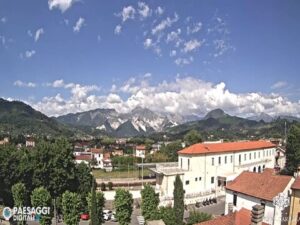
Live

 02:01:48
 -3.2°C / 26.2°F
 Overcast Clouds
 1%
1% 1 km/h / 1 mph
 07:28
07:28 18:28
18:28Loading forecast…
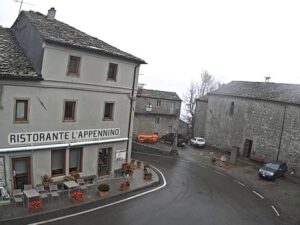
San Pellegrino in Alpe, Garfagnana, Tuscany, Italy
 9.9°C / 49.8°F
02:01
9.9°C / 49.8°F
02:01


Pretare, Arquata del Tronto, Marche, Italy
 5.8°C / 42.4°F
02:01
5.8°C / 42.4°F
02:01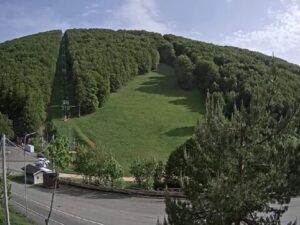
Passo Lanciano - Majelletta, SP220, Pretoro, Province of Chieti, Italy
5°C / 41°F
02:01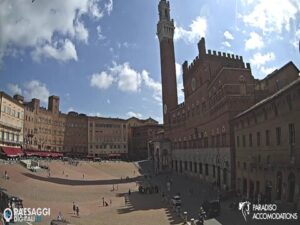
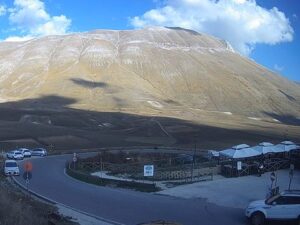
Castelluccio di Norcia, Monti Sibillini, Umbria, Italy
3.2°C / 37.8°F
02:01



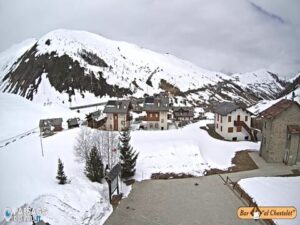
The Dolomites Webcam is feratel’s panorama stream from the mountains of northern Italy, a live broadcast that cuts between about 60 cameras and holds each one for around 20 seconds. One pass through the programme takes 20 minutes. A little over half of it is in the Dolomites: Sesto and the Puster Valley, Alta Badia, Val Gardena and the Seceda station, the Seiser Alm meadows, Cortina d’Ampezzo, Arabba, Canazei, Moena, Carezza, Obereggen and Predazzo. Then it leaves the range for Bormio, Livigno and the Aosta Valley, finishing at Courmayeur. A caption bar names each place and shows the local time, the temperature, the camera’s elevation and a three-day forecast, so a single loop works as a quick weather check for most of the Italian Alps.
The Dolomites run from the Adige River in the west to the Piave Valley in the east, with the Puster Valley along their northern edge and the Sugana Valley to the south. They take their name from the rock dolomite, named after Deodat de Dolomieu (1750 to 1801), the French mineralogist who first described the mineral. The highest summit is the Marmolada at 3,343 meters (10,968 feet). UNESCO inscribed the range as a World Heritage Site in 2009, as a serial property of nine separate areas covering 141,903 hectares (548 square miles), with 18 peaks above 3,000 meters (9,843 feet).
Most of the cameras on the stream sit at ski lift stations, which is why pylons, top stations and snow cannons turn up in so many frames. The Seceda camera, at 2,450 meters (8,038 feet), looks across grassy slopes to a row of sharp rock spires; Seceda itself rises to 2,519 meters (8,264 feet) in the Puez-Odle group above Val Gardena. The three Siusi allo Sciliar views look over the Seiser Alm (Alpe di Siusi), which at 52 square kilometers (20 square miles) is the largest high-elevation Alpine meadow in Europe, spread between 1,680 and 2,350 meters (5,512 and 7,710 feet). The highest view in the Dolomites stretch is Canazei at 2,950 meters (9,678 feet), looking out over snow-dusted ridges, and the lowest is Carezza at 1,620 meters (5,315 feet), where the ski runs climb toward pale limestone walls.
The names switch languages the way the region does. The feratel programme lists the places in German (Sexten, Wolkenstein, Seiser Alm), while the on-screen captions use Italian (Sesto, Selva di Val Gardena, Siusi allo Sciliar). During the First World War, the front line between the Italian and Austro-Hungarian armies ran through these mountains, and both sides used mines extensively.
Cortina d’Ampezzo, at 1,224 meters (4,016 feet), gives a good valley baseline. Its 1991 to 2020 record averages a January high of 3.8 C (39 F) and a low of -5.3 C (22 F), and a July high of 21.9 C (71 F) with nights around 10 C (50 F). April highs are close to 9 C (48 F) with lows near freezing, and October highs close to 13 C (56 F) with lows around 5 C (41 F). Summer brings the most rain and January the least.
The cameras sit well above the valley floors, so their captions usually read colder than Cortina. On a sunny October noon, the Selva and Seceda cameras above 2,250 meters showed between 0 and 3 C (32 and 37 F), while Carezza read 11 C (52 F). The high rock is where snow shows first: fresh snow already lay on the scree below the Cortina camera at 2,475 meters (8,120 feet) and dusted the ridges in the Canazei view while the meadows lower down were still brown and green. In winter the same slopes become groomed pistes, and one loop compares snow cover across more than a dozen ski areas.
The Sella Ronda is the classic ski day here, a circuit of about 40 kilometers (25 miles) around the Sella group over four passes, Gardena, Sella, Pordoi and Campolongo. Around 26 kilometers (16 miles) of it is on pistes and the rest is by lift, and it can be finished in a single day. It starts from Corvara, Canazei, Selva or Arabba, and all four have cameras in the rotation. In summer, the Ortisei-Furnes-Seceda cable cars carry walkers up from Ortisei to the Seceda mountain station, about a 10-minute walk from the summit viewpoint.
Cortina d’Ampezzo hosted the 1956 Winter Olympics and, jointly with Milan, the 2026 Winter Olympics. The town is ringed by the Tofane to the west, Pomagagnon to the north, Cristallo to the northeast and Faloria and Sorapiss to the east. South of Val Gardena, the Seiser Alm plateau lies between the Sassolungo group and the Sciliar massif.
For more Alpine views in and around northern Italy, try these cameras.
A rotation of about 60 mountain cameras, each shown for around 20 seconds, so the programme repeats every 20 minutes. It opens at Monte Lussari above Tarvisio, works through the Dolomites from Sesto to Predazzo, then moves west to Bormio, Livigno, Gressoney, Champoluc and Courmayeur. The order follows feratel’s published programme, though individual slots are sometimes swapped.
In northeastern Italy, between the Adige River and the Piave Valley. The range spans the regions of Trentino-South Tyrol, Veneto and Friuli-Venezia Giulia, across the provinces of South Tyrol, Trentino, Belluno, Udine, Pordenone, Vicenza and Verona.
Yes. The Santa Cristina Val Gardena camera at the Seceda station, 2,450 meters (8,038 feet) up, comes round once every 20 minutes during the day, just after the Col Raiser view. The summit, at 2,519 meters (8,264 feet), is reached by the Ortisei-Furnes-Seceda cable cars from Ortisei.
One view in the rotation is labelled Cortina d’Ampezzo, at 2,475 meters (8,120 feet), listed in the programme as Ra Valles. It looks over grey limestone scree and rock high above the town rather than at Cortina itself.
No. No camera in feratel’s programme is named for the Tre Cime di Lavaredo. The closest views come from Sesto (Sexten), including Monte Elmo at 2,070 meters (6,791 feet), which looks across the valley to the Sexten Dolomites, and from Cortina d’Ampezzo.
Cold winters and mild summers, with temperatures falling as the ground rises. Cortina d’Ampezzo averages a January high of 3.8 C (39 F) and a July high of 21.9 C (71 F), and the cameras usually read several degrees colder. Every caption carries the current temperature and a three-day iLMeteo forecast for that spot.
No. The feratel programme runs the live rotation from 6 am to 9 pm Italian time. Between 9 pm and 6 am the stream plays replays of the day’s footage, alternating with short timelapse sequences, so the player never goes dark.
Source: feratel
The best new live webcams and site features, once a week.
By subscribing you agree to receive our weekly email. Unsubscribe any time.
 14.8°C / 58.6°F