
 English
 简体中文
 Deutsch
 Français
 Español
 Nederlands
 Svenska
 Italiano
 日本語
 Polski
 Português
 Русский
 Ελληνικά
 العربية
 Türkçe
Live
Gramado, Brazil
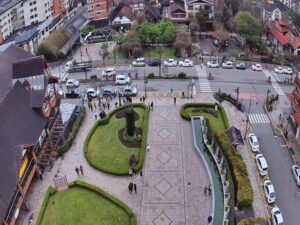
Igreja São Pedro, Gramado, RS - Avenida Borges de Medeiros - Centro, Gramado - RS, Brazil
 17.4°C / 63.3°F
 06:3206:32:22
 23.4°C / 74.1°F
 Overcast Clouds
 26%
 1 km/h / 1 mph
 05:09
 18:34
Loading forecast…
Igreja São Pedro, Gramado, RS - Avenida Borges de Medeiros - Centro, Gramado - RS, Brazil
17.4°C / 63.3°F
06:32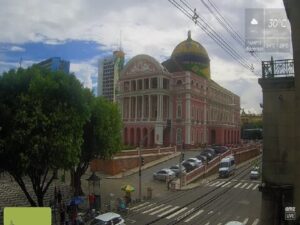
Teatro Amazonas - Largo de São Sebastião - Centro, Manaus - State of Amazonas, Brazil
 28.2°C / 82.8°F
05:32

Lawson's Landing, Tomales Bay, California, USA
6.8°C / 44.2°F
01:32

Popocatepetl Volcano, San Pedro Benito Juárez, Mexico
-0.8°C / 30.6°F
03:32

Sandy Hook, Monmouth County, New Jersey, USA
 8.6°C / 47.5°F
04:32


Sacramento NWR, Glenn County, California, USA
6.3°C / 43.3°F
01:32
Torreón del Monje, Paseo Jesús de Galindez, Mar del Plata, Buenos Aires Province, Argentina
13.7°C / 56.7°F
06:32
The Porto de Santos Webcam looks southwest from high above Ponta da Praia in Santos, Brazil, straight down the mouth of the channel that leads into the port. Forested hills on the Guaruja side fill the left of the frame, with the white walls of the Barra Grande fortress at the waterline. Past that headland the water opens into Santos Bay, and a line of hills closes the far horizon. On the right, a palm-lined waterfront avenue runs away beside a club pool and a floodlit football pitch, under a tall apartment tower at the edge of the picture. Ocean-going ships bound for the terminals upriver pass through this gap. On one November afternoon a dredger came in through the middle of the frame while small boats rode at their moorings off the fort.
The camera belongs to Praticagem de Sao Paulo, the maritime pilots who take ships in and out of the port, and its stream is named for the entrance to the Santos port channel. That entrance is what it watches. The quays, cranes and container terminals sit farther up the estuary, behind the camera, so this view is about arrivals and departures rather than loading. The organized port opened on 2 February 1892 and grew on coffee exports. Today it is Brazil’s leading container port. It handled 147 million tonnes (162 million short tons) of cargo in 2021, with coffee, sugar, soy, orange juice and cars among its main exports.
The fortress on the far shore is the Fortaleza de Santo Amaro da Barra Grande. Work on it began in 1584, after an English corsair raided Santos in December 1583, and it stands on Santo Amaro island between Praia do Gois and Santa Cruz dos Navegantes, overlooking the same channel the ships still use. IPHAN, the national heritage institute, listed it on 23 April 1964. Santos, the city the camera stands in, had 418,608 residents at the 2022 census and lies about 50 kilometers (31 miles) from the city of Sao Paulo.
Santos is warm and humid all year, with no real cold season. In summer, from December to March, average highs reach 29.4°C (85°F) in January and February and nights stay around 22.8°C (73°F). March is the wettest month, with 257 millimeters (10.1 inches) of rain, and the rainy months bring the heaviest cloud over the Guaruja hills. Low cloud often sits on the ridges even on dry days, as it did on the frames checked for this page, and it can hide the hills on the far side of the bay.
Autumn cools slowly, from highs of 27.3°C (81°F) in April to 25.2°C (77°F) in May. Winter, from June to August, is the mild and drier season: July averages a high of 23.0°C (73°F) and a low of 15.9°C (61°F), and August is the driest month at 73.6 millimeters (2.9 inches). Spring warms from 24.7°C (76°F) in October to 26.7°C (80°F) in November. The yearly total is 1,843.9 millimeters (72.6 inches), according to INMET normals for 1981 to 2010. Late in the day the camera faces the lowering sun, so on clear afternoons the water turns silver and the Guaruja hills fall into shadow.
The Aquario Municipal de Santos sits on the seafront in the same Ponta da Praia district. It opened in July 1945 and is the oldest public aquarium in Brazil. From the Ponte Edgard Perdigao pier in Santos, boats cross the channel to the Barra Grande fortress, which is open to visitors and can also be reached by road through Santa Cruz dos Navegantes on the Guaruja side. The city’s beachfront garden ends at Ponta da Praia too. It runs for 5,335 meters (3.3 miles) along the sand to Jose Menino, and Guinness lists it as the largest beachfront garden in the world.
In the old center, the Coffee Museum fills the palace where most of Brazil’s coffee export deals were once struck, and it has been a museum since 1998. The Pele Museum, open since 2014, follows the footballer from his childhood through a career spent mostly at Santos FC, with his trophies and statistics on display. Monte Serrat rises 157 meters (515 feet) above downtown, and a funicular has climbed it since June 1927. At the top are the Sanctuary of Nossa Senhora do Monte Serrat and a viewpoint that looks out over the whole city.
For more harbors and coastline in Brazil and beyond, try these cameras.
It is mounted high above Ponta da Praia, the district at the entrance to the port in Santos, on the coast of Sao Paulo state in Brazil, about 50 kilometers (31 miles) from the city of Sao Paulo. It looks southwest down the mouth of the port channel toward Santos Bay, with Guaruja across the water on the left.
The entrance to the Santos port channel. The forested Guaruja shore and the Barra Grande fortress fill the left side, Santos Bay and distant hills open up in the middle, and the palm-lined waterfront avenue, a club pool and a floodlit football pitch run along the right. Ships, dredgers and small boats pass through the middle of the frame on their way in and out of the port.
No. The quays, cranes and container terminals of the Port of Santos lie farther up the estuary, behind the camera. This camera watches the channel mouth, so it shows ships arriving and leaving rather than cargo being handled.
Praticagem de Sao Paulo, the Sao Paulo pilots, streams it on its official YouTube channel under the title Porto ao Vivo, which means “port live”. Its pilots board arriving ships and guide them through this channel to their berths.
The Fortaleza de Santo Amaro da Barra Grande, on the Guaruja side of the channel. Construction began in 1584 after an English corsair attacked Santos in December 1583, and IPHAN listed it as national heritage in 1964. It is open to visitors, by road or by boat from Santos.
Warm and humid all year. Average highs run from 22.7°C (73°F) in August to 29.4°C (85°F) in January and February, and the city gets about 1,844 millimeters (72.6 inches) of rain a year, with March the wettest month and August the driest.
Yes, the stream keeps running after dark. At night the lit fortress, the lights of ships in the channel, the street lamps along the waterfront avenue and the floodlit football pitch stand out, while the hills and the far side of the bay disappear into the dark.
Source: Praticagem de Sao Paulo
The best new live webcams and site features, once a week.
By subscribing you agree to receive our weekly email. Unsubscribe any time.
 19.4°C / 66.9°F
 9.7°C / 49.5°F
 -0.9°C / 30.4°F
 7.6°C / 45.7°F