Live

 02:29:59
 7.7°C / 45.9°F
 Overcast Clouds
 93%
 1 km/h / 1 mph
 07:46
 18:21
Loading forecast…
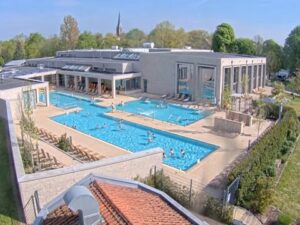
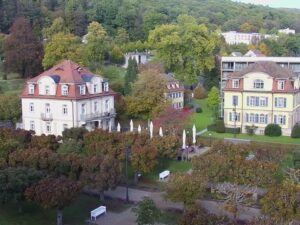
The Balderschwang Webcam looks across the upper Balderschwang valley in the Allgau Alps of Bavaria, from the Bio-Berghotel Ifenblick on the western side of the village. A long green meadow drops toward the road in the foreground, and beyond it the houses of Balderschwang gather around the pointed spire of the parish church. Forested ridges close off the valley behind, with a long cleared strip running down the slope on the right. Low cloud often sits on those ridges, and this valley gets more rain and snow than any other place in Germany. The hotel streams the camera around the clock and switches between angles, so the village view alternates with a lower shot of the slopes beside the hotel.
Balderschwang sits at 1,044 meters (3,425 feet), which makes it the German municipality with the highest-lying village center. It is also tiny. With 388 residents at the end of 2025, it is the second smallest municipality in Bavaria by population after Chiemsee, spread over 41.74 square kilometers (16.1 square miles) of alpine pasture and forest. The Austrian border runs along the entire western boundary of the municipality, right up to the edge of the village, and the valley lies inside the Nagelfluhkette Nature Park, which Germany and Austria run together.
That border shaped daily life here. Until the road over the Riedbergpass opened in 1961, people in Balderschwang could only reach the rest of Germany by car by driving through Austria. The pass, at about 1,400 meters (4,600 feet), carries the highest pass road in Germany and is still the main way in from Fischen. The parish church at the heart of the view is dedicated to Saint Anthony, whose lily appears on the village coat of arms.
The camera is mounted at the hotel’s Panorama Spa in the hamlet of Gschwend. According to the hotel, the two summits on the skyline are the Gelbhansekopf and the Feuerstatterkopf, with the Hoher Ifen, the mountain the hotel is named after, rising in the saddle between them on clear days. About 1 kilometer (0.6 miles) northeast of the village center, an old yew tree stands in an alpine pasture at 1,150 meters (3,773 feet). Estimates put its age at 800 to 1,500 years, far short of the 4,000 years once claimed locally, and its split trunk measures more than 8 meters (26 feet) around at chest height.
Balderschwang averages about 2,450 millimeters (96 inches) of precipitation a year, the highest average of any place in Germany, and its record year, 1970, brought 3,503 millimeters (138 inches). Much of it falls as snow, with more than 7 meters (23 feet) of new snow in a typical year. January days reach about 2 C (36 F) and nights drop to around -5 to -6 C (23 to 21 F), so the meadows in front of the camera often stay white from early winter into March. On wet days the cloud base can sink below the ridge tops, leaving only the village and the nearest meadows clear.
Spring comes late at this height. April afternoons average around 11 C (52 F) with nights close to freezing, and snow can linger on the upper slopes after the valley floor has turned green. Summer is mild and also the wettest part of the year: July and August days typically reach 20 to 23 C (68 to 73 F), with nights around 11 to 12 C (52 to 54 F). October and November are among the drier months. October days average about 13 C (55 F) and nights about 4 C (39 F), and the first snow can dust the ridges in the background before it settles in the village.
Winter is the main season. Two chairlifts and three larger T-bars serve about 30 kilometers (19 miles) of runs on the Hochschelpen and the Riedberger Horn, and the Riedberger Horn side adds a snow tubing lift for families. Up on the Riedbergpass, the small Grasgehren ski area has four T-bars and a chairlift of its own. Cross-country skiers get a network of about 45 kilometers (28 miles) of groomed trails that connects across the border with the trails around Hittisau in Austria.
In summer the same slopes become hiking country. Marked routes climb to the Riedberger Horn at 1,787 meters (5,863 feet), the Siplingerkopf at 1,745 meters (5,725 feet) and the Hochschelpen at 1,552 meters (5,092 feet), and the Hochgrat at 1,834 meters (6,017 feet) is a longer day out on the Nagelfluhkette ridge. Lower paths lead to summer alps such as the Scheidwangalpe, the Obere Socheralpe and the Untere Balderschwanger Alpe, and the Scheuenalpe is the starting point for the walk to the Scheuen waterfall. The old yew is a short walk from the village center.
For more small towns and valleys along the northern edge of the Alps, try these cameras.
Balderschwang is in the Oberallgau district of Bavaria, in southern Germany, in a valley of the Allgau Alps that borders Vorarlberg in Austria. The road in crosses the Riedbergpass from Fischen, and a second route comes in from Hittisau in Austria’s Bregenzerwald.
The main view looks from the Bio-Berghotel Ifenblick across a meadow and the road to the village and its church spire, with forested ridges and, on clear days, the Hoher Ifen behind. A second, lower angle shows the slopes beside the hotel.
Only in part. The lower camera angle covers the slopes beside the hotel, which are ski runs in winter and pasture in summer, but this is not a lift-by-lift ski cam. It will not show which runs on the Hochschelpen or the Riedberger Horn are open.
Not trail by trail. The view shows whether there is snow on the valley floor around the village, which is a good first sign for the 45 kilometer (28 mile) trail network, but it does not show grooming or trail conditions.
No. The camera sits on the western side of the village and looks toward it, while the pass summit at about 1,400 meters (4,600 feet) lies up the road toward Fischen, outside the view. Check road conditions on the pass separately before driving over in winter.
Cool and very wet. January days reach about 2 C (36 F) and summer days 20 to 23 C (68 to 73 F). At about 2,450 millimeters (96 inches) a year, Balderschwang has the highest average precipitation in Germany.
The hotel streams it 24 hours a day, but there is little to see after dark beyond any lights in the village. The clearest pictures come in daytime, when the cloud lifts off the ridges.
Source: Bio-Berghotel Ifenblick
The best new live webcams and site features, once a week.
By subscribing you agree to receive our weekly email. Unsubscribe any time.
 8°C / 46.4°F

 7.5°C / 45.5°F




 5.7°C / 42.3°F