
 English
 简体中文
 Deutsch
 Français
 Español
 Nederlands
 Svenska
 Italiano
 日本語
 Polski
 Português
 Русский
 Ελληνικά
 العربية
 Türkçe

Live

⚠️ We're aware of a problem with this webcam.
 12:54:32
 -2.4°C / 27.7°F
 Light Snow
 90%
 5 km/h / 3 mph
 06:22
 17:48
Loading forecast…
Midway Atoll, United States Minor Outlying Islands
 23.9°C / 75°F
11:54




Lake Hopatcong, Jefferson Township, New Jersey, USA
 13.1°C / 55.6°F
18:54

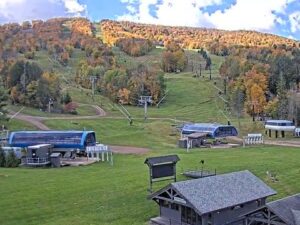
Windham Mountain, Resort Drive, Windham, NY, USA
 5.1°C / 41.2°F
18:54
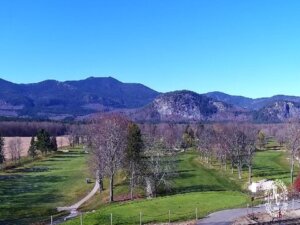
North Conway Golf Course, Norcross Circle, North Conway, New Hampshire, USA
5.4°C / 41.7°F
18:54



King Street, Old Town Alexandria, Virginia, USA
17.1°C / 62.8°F
18:54The Subaru Telescope Webcam looks east from the Subaru Telescope across the summit of Mauna Kea on Hawaii Island, 4,139 meters (13,579 feet) above sea level. The twin domes of the W. M. Keck Observatory stand in the lower left of the frame, and smaller observatory domes sit along the ridge to the right. The rest of the picture is sky. After dark the low-light camera picks up a sky crowded with stars, meteors crossing the frame and, on some nights, the orange laser beams that summit telescopes shine into the sky. By day the domes stand white against a deep blue sky. A second tab carries the West view from the Canada-France-Hawaii Telescope (CFHT), which looks back across the summit toward Keck and Subaru.
Subaru is the National Astronomical Observatory of Japan’s 8.2-meter (27-foot) optical and infrared telescope. It took its first scientific images in January 1999, and its single-piece primary mirror was the largest of its kind in the world until the Large Binocular Telescope opened in 2005. The building around it was shaped to cut down the air turbulence that blurs astronomical images. The telescope is named after the Pleiades, the star cluster that rises into this eastern sky on autumn evenings.
Its best-known instrument is Hyper Suprime-Cam, a 900-megapixel camera with a 1.5-degree field of view, used for surveys that map dark matter through weak gravitational lensing. Day-to-day support comes from the Hilo Base Facility in Hilo’s University Park, with a staff of about 100.
Subaru sits about 70 meters (230 feet) below the true top of Mauna Kea, which reaches 4,207 meters (13,803 feet). Measured from its base on the ocean floor, the mountain rises 9,330 meters (30,610 feet). It is a dormant volcano that last erupted between 4,500 and 6,000 years ago, and its summit now holds 13 observation facilities. In ancient Hawaii the summit was restricted to high-ranking ali’i and regarded as the region of the gods, and Maunakea, the spelling the University of Hawaii and the observatories use, remains a mountain of great cultural significance to Native Hawaiians.
The East view comes from a Sony FX3 with a 24 mm f/1.4 lens, run by Asahi Astro LIVE, the astronomy channel of the Japanese newspaper Asahi Shimbun, together with NAOJ. The West view camera sits at CFHT. From right to left it takes in the NASA Infrared Telescope Facility, Keck 2, Keck 1 and Subaru, with the small antennas of the Submillimeter Array and the James Clerk Maxwell Telescope lower left.
The summit has an alpine climate, and the long-term record from the observatory weather station at about 4,200 meters (13,800 feet) shows average lows below freezing in every month. Winter afternoons, from December to February, average about 6°C (42 to 43°F), with nights around -3°C (26 to 28°F). March and April are the coldest, with highs near 5°C (40 to 41°F), before May warms to about 9°C (48°F). Summer brings the mildest afternoons at around 10°C (49 to 51°F), with nights near -1°C (29 to 31°F). Autumn starts warm, with September averaging 10°C (51°F), then cools to about 7°C (44 to 45°F) in October and November.
The name Mauna Kea means white mountain, after its seasonally snow-capped summit. Snow can fall above 3,353 meters (11,000 feet) in any month, but it comes most often between October and April, so the camera can show snow around the domes after a winter storm and bare reddish cinder for much of the year.
The summit is reached by the Maunakea Access Road, and the usual stopping point is the Onizuka Center for International Astronomy Visitor Information Station at 2,804 meters (9,200 feet). It runs free stargazing programs with its own telescopes, has short hiking routes and the First Light Store, and visitors are asked to acclimatize there before going higher. Above the station four-wheel drive is required and low range is advised on the steep road, while children under 13, pregnant women and people in poor health are advised to stay below.
Lake Waiau lies below the summit at 3,969 meters (13,022 feet), a small lake up to 3 meters (9.8 feet) deep when full. Down in Hilo, about 42 kilometers (26 miles) east of the summit, the ‘Imiloa Astronomy Center stands in University Park beside the base facilities of several Mauna Kea observatories, Subaru’s among them. The Hamakua Coast on the mountain’s northeastern side has Akaka Falls State Park, Wailuku River State Park and Kalopa State Recreation Area.
Another observatory camera in Japan, and two more live views on Hawaii Island:
The main camera faces east from the Subaru Telescope on the summit of Mauna Kea. The twin Keck domes sit in the lower left, smaller domes line the ridge to the right, and the rest of the frame is sky: stars and meteors at night, blue sky by day. The West view tab looks back at the Keck domes and Subaru from CFHT.
On the summit of Mauna Kea on Hawaii Island, at 4,139 meters (13,579 feet), about 42 kilometers (26 miles) west of Hilo, where its base facility is.
Yes. This page carries two from the summit, both run by Asahi Astro LIVE: the East view from the Subaru Telescope and the West view from the Canada-France-Hawaii Telescope.
No. Both cameras are at the summit, about 1,300 meters (4,400 feet) above the Visitor Information Station, and neither shows the station or any part of the coast.
Not year-round. Snow can fall above 3,353 meters (11,000 feet) in any month, but it falls most often from October to April. After a winter storm the ground around the domes on camera can turn white.
Cold for Hawaii. At the summit, average highs run from about 5°C (40°F) in March to about 10°C (51°F) in July and September, and average lows stay below freezing all year.
It is a laser guide star. Telescopes on the summit shine a laser into the sky to create an artificial star, which their adaptive optics use to correct for the blurring of the atmosphere, as the camera operator explains in the stream description.
Yes. Asahi Astro LIVE bills both summit streams as meteor shower cams, and the stream descriptions link to a log of notable meteors caught on its cameras.
Source: Asahi Astro LIVE (credit: NAOJ, CFHT and Asahi Shimbun)
The best new live webcams and site features, once a week.
By subscribing you agree to receive our weekly email. Unsubscribe any time.
 27.2°C / 81°F
 10.7°C / 51.3°F
 21.2°C / 70.2°F
 26.9°C / 80.4°F