Live

 23:29:56
 11.9°C / 53.4°F
 Broken Clouds
 83%
83% 4 km/h / 2 mph
 07:17
07:17 18:18
18:18Loading forecast…


Buckfastleigh Station, Devon, United Kingdom
 14.1°C / 57.4°F
23:29
14.1°C / 57.4°F
23:29




The Barber Shop Buckingham, Market Square, Buckingham, UK
 10.5°C / 50.9°F
23:29
10.5°C / 50.9°F
23:29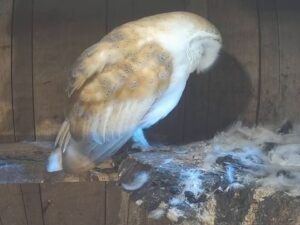


Riverside Rd, Hoveton, Norwich NR12 8UD, United Kingdom
9.2°C / 48.6°F
23:29The Surrey Bird Feeder Webcam is trained on two hanging feeders at one of Surrey Wildlife Trust’s woodland nature reserves in South East England. A wire-mesh cage stacked with fat balls hangs on the left, and a clear tube feeder with green ports and metal perches hangs on the right, both in front of a weathered timber wall where low morning sun can throw the feeders’ shadows across the boards. The Trust counts blue tits, great tits, coal tits, nuthatches and great spotted woodpeckers among its regular visitors, so who lands next is the whole point of watching. The menu changes with the seasons, and a quiet weekend can leave the tubes empty until staff refill them on Monday.
Surrey Wildlife Trust runs this camera and describes the site only as one of its woodland nature reserves, without naming which one, so the map on this page marks the county rather than an exact spot. The Trust was founded in 1959 as the Surrey Naturalists’ Trust and, as of April 2022, managed 68 nature reserves covering more than 6,000 hectares (15,000 acres). The current feeder broadcast has been running on its YouTube channel since October 2024.
Surrey is the most wooded county in England, with 22.4 percent tree cover against a national average of 11.8 percent, spread over 1,663 square kilometers (642 square miles) that are home to about 1.25 million people.
A second tab, Nest Box, carries the Trust’s nest box camera, which the Trust places at Nower Wood near Leatherhead; it does not say whether the feeders are on the same reserve. That picture is infrared and greyscale, and outside the breeding season it usually shows an empty box, which in October held an old nest of moss and fibres. Small birds such as tits typically move into nest boxes in spring: the Trust says nest building usually starts in late March, eggs are normally laid in April or early May, and the box suits blue, great, coal and marsh tits.
The feeding plan follows RSPB guidance. From 1 May to 31 October the Trust takes loose seed, seed mixes and peanuts off the feeders to help stop the spread of trichomonosis, a highly contagious disease that research has linked to a decline in some garden bird species. Through those months it keeps putting out small amounts of high-protein food such as mealworms, fat balls or suet, which attract fewer finches and help birds through the moult. In October the tube on camera held dried mealworms.
Which of the Trust’s twelve regular visitors turns up on a given morning comes down to luck, the season and how much food is left. Two are worth learning by sight. The marsh tit, despite its name, is a woodland bird, and it is classified Red on the UK’s Birds of Conservation Concern list (2021). Its “pitchoo” call sounds a bit like a sneeze, and it often caches food over winter when it finds a good supply. The nuthatch is grey above with a rust-colored belly and a long black eye stripe, and it is the only UK bird that can climb headfirst down a tree trunk.
The Met Office climate station at Wisley, near Guildford, gives a good picture of the county’s weather. Its 1981 to 2010 averages put July highs at 23.0 C (73.4 F) with lows of 12.4 C (54.3 F), while January averages a high of 7.9 C (46.2 F) and a low of 2.1 C (35.8 F). Rain is spread through the year, about 658 mm (25.9 inches) in total, and October is the wettest month at 77.8 mm (3.1 inches).
At midsummer Surrey gets about 16 and a half hours of daylight, the seed is off the feeders and natural food such as seeds and insects is easier for birds to find, according to the Trust. October highs still average 15.4 C (59.7 F). In late December the sun is up for under 8 hours, so the feeders get only a short day of low winter light.
Norbury Park, a Surrey Wildlife Trust reserve in the Surrey Hills, covers 531 hectares (1,310 acres) of woodland and grassland. Its woods fill with bluebells in spring and hold roe deer, badgers, dormice and all three British woodpeckers. Chobham Common, also managed by the Trust, spreads over 574 hectares (1,420 acres), and its deciduous woodland is good for chiffchaffs, blackcaps and tits.
Sheepleas is a Local Nature Reserve of 110 hectares (270 acres), bought by Surrey County Council in 1936, with woodland, grassland and strong wildflower displays. For a longer walk, Leith Hill near Dorking is Surrey’s highest point at 295 meters (968 feet).
For more British wildlife and other feeder cameras, try these next.
It is at one of Surrey Wildlife Trust’s woodland nature reserves in Surrey, South East England. The Trust does not say which reserve hosts the feeders, so the map shows the county rather than a precise location.
Two feeders hanging in front of a timber wall: a mesh cage of fat balls on the left and a clear tube feeder with perches on the right. Woodland birds drop in to feed, and the stream shows a clock and date in the bottom-left corner. A second tab shows the Trust’s nest box camera.
The Trust lists blue tits, great tits, coal tits, marsh tits, long-tailed tits, blackcaps, greenfinches, goldfinches, nuthatches, robins, great spotted woodpeckers and magpies as regular visitors.
Staff refill the feeders every day during the working week. If the birds eat everything before staff return on Monday, the feeders can look empty on Saturday and Sunday.
Following RSPB guidance, the Trust removes loose seed, seed mixes and peanuts from 1 May to 31 October to slow the spread of trichomonosis, a contagious disease that spreads where birds gather at feeders. Mealworms, fat balls or suet stay on offer in small amounts.
Mild, with rain spread through the year. At Wisley, July averages highs of 23.0 C (73.4 F) and January highs of 7.9 C (46.2 F), and October is the wettest month.
The Trust says nest building usually starts in late March and eggs are normally laid in April or early May. Most small birds take 10 days to 2 weeks to hatch and about as long again to fledge. Outside that season the box is usually empty, although blue tits and great tits sometimes use it for shelter in winter.
Source: Surrey Wildlife Trust
The best new live webcams and site features, once a week.
By subscribing you agree to receive our weekly email. Unsubscribe any time.
 5.2°C / 41.4°F