
6 Best Hawaii Webcams: Beaches, Surf and Lava
The best Hawaii webcams let you check the surf on Oahu, watch the sand fill up on Maui, and catch lava glowing at Kilauea, all without booking a flight. We run a lot of island cams, and these six are the ones worth keeping in a browser tab. A few point at world-famous surf breaks. One looks straight into an active crater, and another sits above the clouds near the top of Mauna Kea.
Banzai Pipeline, Oahu: the surf everyone knows
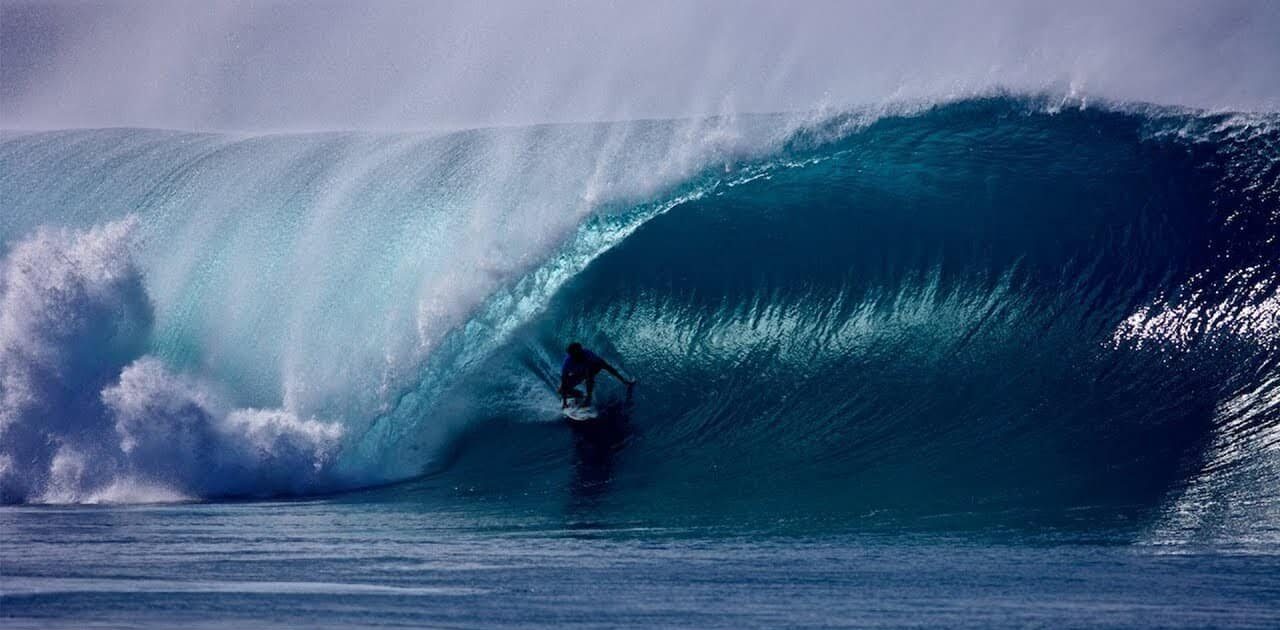
Banzai Pipeline is the most famous wave in surfing, and the live Pipeline webcam looks straight at it, a heavy reef break on Oahu’s North Shore near Haleiwa. In winter, north swells stack up and peel into hollow tubes that surfers ride from the inside. It is the clearest window into why Hawaii built its name on waves.
Pipeline is a winter animal. From roughly November through February the sets get big and the lineup fills with pros, so that is when the cam earns its keep. Summer mornings run calmer, sometimes flat, and the water turns glassy. The break sits close to shore, so you can usually pick out individual surfers instead of just white water. For more breaks like it, our collection of live surf cameras pulls together reef and beach breaks from around the world.
Kaanapali Beach on Maui, from morning calm to sunset
Kaanapali is Maui’s resort stretch, a long curve of golden sand on the island’s west side backed by hotels and a couple of beachfront pools. The Kaanapali Beach webcam looks down the beach and out across the channel toward Lanai, so you get sand, swimmers, anchored catamarans, and open ocean in one frame.
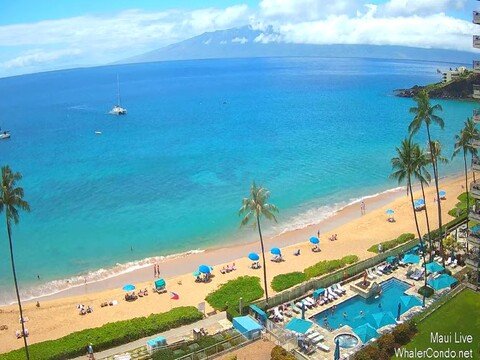
Late afternoon is the payoff here. The sun sets over the water on this side of Maui, and the light goes gold about an hour before it drops. Winter adds to the show: humpback whales pass through the channel from December into April, and on a calm day you can spot a spout or the odd splash from the cam. Mornings stay quieter and are better for reading the water than the crowds. If the beach talks you into a trip, it is easy to compare places to stay along Kaanapali Beach.
Reef and snorkelers at Lawai Beach, Kauai
On Kauai’s sunny south shore near Koloa, Lawai Beach is small but busy with snorkelers. A natural rock ledge holds back the open ocean and makes a calm pool over the reef, while waves break just outside it. The Lawai Beach webcam catches all of it: turquoise water, leaning palms, and the reef line offshore.

This is one of the better cams for reading real water conditions. When the pool looks flat and clear, snorkeling is good. When whitewater washes over the ledge, it is a day to stay on the sand. Surfers work the reef break off to the side. Kauai’s south shore gets its biggest waves in summer, so a July or August swell can light this spot up while the North Shore sleeps.
Kihei: quieter beaches on Maui’s south shore
Kihei sits on Maui’s south shore, the island’s dry, sunny side, where the beaches run calmer and less polished than the west-side resorts. The Kihei webcam looks down a curve of gold sand past a rocky point, palms leaning in the foreground and gentle surf rolling up the beach.

South Maui gets a lot of sun, so this feed is lit and clear more often than not. The beach breaks into sandy pockets separated by low rocky points, and snorkelers work the rocks when the water is calm. Late afternoon is the best watch, when the light softens and the surf drops to almost nothing before sunset. Early mornings can look flat and a little hazy, so give it an hour after sunrise.
Can you really see lava on the Kilauea webcam?
Often, yes. The Kilauea volcano webcam points into the summit crater inside Hawaii Volcanoes National Park, where the U.S. Geological Survey tracks the eruption. When Kilauea is active you can see glowing vents, lava on the crater floor, and steam. When it pauses, you get dark rock and drifting gas instead.

The glow reads best after dark, when the crater turns deep red against a black sky. By day you are mostly looking at steaming ground and old, wrinkled lava. Kilauea is one of the most active volcanoes on Earth, so its moods shift over weeks, not years. If craters pull you in, we gathered more of them in our guide to the best live volcano webcams. For a closer look on the ground, there are guided tours of Hawaii Volcanoes National Park that run day and night.
Mauna Kea’s summit and the Subaru Telescope
Near the top of Mauna Kea, at almost 13,800 feet, the Subaru Telescope webcam shows the observatory domes and the sky above them. By day it is white domes against deep blue, often with a sea of clouds sitting below the summit. At night the same cam catches stars and, now and then, the laser used to guide the telescope.

This is the highest view on the list by a wide margin, and it feels like it. The air up there is thin and cold, and the cam sometimes ices over or ends up inside a cloud. Sunset and the hour after are the sweet spot, when the domes crack open and the sky darkens fast. You cannot drive to the summit casually because of the altitude, so several Mauna Kea summit and stargazing tours handle the drive and the gear. It is the one Hawaii cam that is better at night.
Worth knowing before you watch
Hawaii runs on Hawaii Standard Time, UTC minus 10, and the state does not change clocks for daylight saving. That keeps it two to three hours behind the U.S. West Coast, so when it is midday in California, it is mid-morning in Hawaii.
In early August the islands get daylight from roughly 6 a.m. to just past 7 p.m. local time, so aim for those hours if you want a lit view. Some feeds also go dark or drop offline now and then. Night shots are genuinely black except for Kilauea’s glow and the stars over Mauna Kea, so pick Hawaii daytime unless you specifically want the volcano or the observatory. A frozen cam usually clears with a refresh.
Hawaii also shows up in our wider roundup of the top webcams across the United States if you want to line it up against the mainland.
Frequently Asked Questions
Are these Hawaii webcams live around the clock?
Yes, all six stream 24 hours a day, though what you see depends on the local time in Hawaii. Daytime gives you beaches, surf, and the bay. After dark most feeds go black except the Kilauea crater glow and the stars over Mauna Kea. Feeds occasionally drop and then come back on their own.
Which Hawaii island has the best beach cam?
It depends on what you want. Maui’s Kaanapali cam is the classic wide resort beach, with sunset light and winter whales offshore. Kauai’s Lawai Beach cam is better for reading snorkeling conditions over a reef. Oahu’s Pipeline is the one to watch for serious surf, mainly in the winter months.
When is the surf biggest on the Oahu cams?
Oahu’s North Shore, Pipeline included, gets its largest waves in winter, roughly November through February, when north swells arrive. Summer is usually small or flat on that coast. Kauai’s south-facing Lawai Beach flips the pattern and sees its biggest surf during the summer instead, so the two cams peak at opposite times of year.
Do the Hawaii cams show whales?
Sometimes. Humpback whales are in Hawaiian waters from about December through April, and the Kaanapali Beach cam on Maui looks out over a channel they use. You will not see them on cue, but on a calm winter day you can catch a spout or a splash offshore if you watch for a while.
Six cameras, four islands
Hawaii packs a lot into six cameras: two islands’ worth of surf, a couple of easy beaches, a live crater, and a summit above the clouds. Bookmark the ones that fit your plans and check them before you commit to dates. When you want the rest, the full Hawaii live cam collection keeps every island in one place.