
7 Best Wildlife Webcams You Can Watch Right Now
Live wildlife webcams let you watch real animals go about their day, from brown bears fishing in Alaska to giraffes crossing a Kenyan salt lick. The seven cams below earn their spot on what they actually show, not on a nice still frame. A few run around the clock. Others go dark after sunset or come alive in one season, and that is flagged where it matters.
Watch brown bears fish at Brooks Falls, Alaska
The Katmai brown bear cam points straight at the top of Brooks Falls in southern Alaska, where bears stand in the whitewater and wait for sockeye salmon to leap upstream. Watch for a few minutes in summer and you will usually catch at least one bear working the lip of the falls.
July and September are the busy months, timed to the two salmon runs. Big males take the prime spots right on the falls while younger bears fish the calmer water below. The feed runs in daylight hours, and Alaska sits well behind most of the world, so the falls are busiest for Northern Hemisphere viewers in the afternoon and evening. Bears wander off between fishing bouts, so if the ledge looks empty, check back in twenty minutes.
Kenya’s Masai Mara salt lick
This camera looks out over a salt lick on Kenya’s Masai Mara, where mineral-rich soil pulls a steady rotation of animals into frame. Giraffes, impala, warthogs, and the occasional elephant come to lick the ground, so there is almost always something on screen, even in the flat light of midday.

The Mara runs on Kenya time, three hours ahead of London, and the light is best early morning and late afternoon there. Between July and October the Great Migration moves through, when wildebeest and zebra pour across the reserve and your odds of a big herd on the Masai Mara salt lick webcam go up sharply. Predators use the same trails, so keep an eye out for lions and hyenas around dawn. If you are tempted to see it in person, compare places to stay near the Masai Mara.
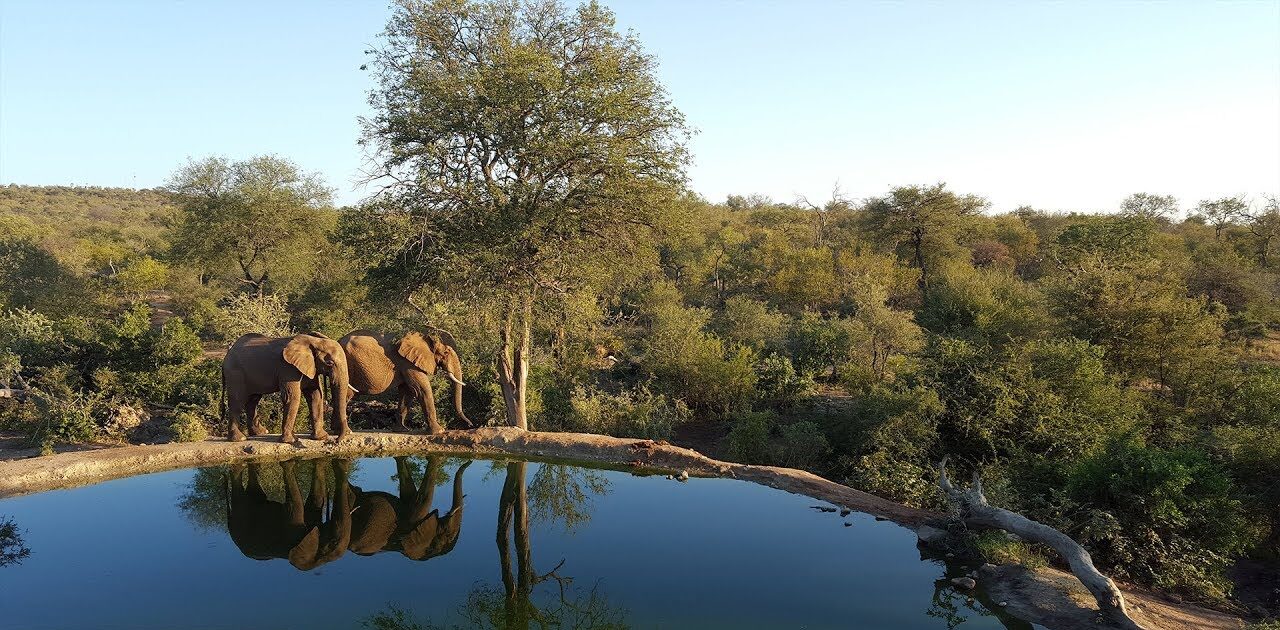
A waterhole in Hwange, Zimbabwe
The Hwange cam overlooks a waterhole run by The Hide safari camp in western Zimbabwe. In the dry season, roughly May to October, this is one of the strongest wildlife cams on the site, because water gets scarce and elephants, buffalo, hippos, and baboons all funnel down to drink.

Elephants tend to arrive in the heat of the afternoon and can hang around for an hour or more. Zimbabwe is two hours ahead of London, and the low evening sun there throws the golden light you will see wash across the grass on the Hwange waterhole camera. Nights are dark, with no floodlight, so treat this as a daytime feed. When the rains return around November, the animals spread out and the waterhole goes quiet.
Giant pandas munch bamboo in Chengdu, China
The Chengdu giant panda cam comes from the Chengdu Research Base of Giant Panda Breeding, where the bears spend most of their waking hours sitting in the bamboo and eating. A single panda gets through many kilos of it a day, so feeding really is most of the show, and it is oddly calming to watch.

Pandas are most active in the cooler morning hours, Chengdu time, and China runs eight hours ahead of London and thirteen ahead of New York. When the base has cubs, they are the ones to watch for their clumsy climbing and tumbling. The enclosure is leafy and shaded, so the Chengdu giant panda cam can look dim under heavy tree cover even at midday. Trip planners can line up panda base tours in Chengdu ahead of a visit.
Hummingbird feeders in the Ecuador cloud forest
Point the Ecuador hummingbird cam at a cluster of feeders high in the Andes and you get near-constant motion. Long-tailed sylphs trailing electric-blue tails, plus violetears and coquettes, dart in for sugar water, sometimes six or seven at a time, bickering over the best feeder.
Ecuador sits on the equator, so day length barely shifts through the year and the birds turn up whenever it is light. Overcast, drizzly weather is normal in cloud forest, and the hummingbirds clearly do not mind it. Turn the sound up if the stream carries audio; the whir of wings and the sharp chips are half the appeal. This is the cam to leave running in a corner of your screen while you work.
Sharks patrol the Monterey Bay kelp forest, California
The Monterey Bay Aquarium runs several live feeds, and the Kelp Forest Cam is the pick of them: a towering tank where sharks, sardines, and a wall of swaying giant kelp fill the frame. Stay with it a while and a sevengill shark will usually slide past the glass.
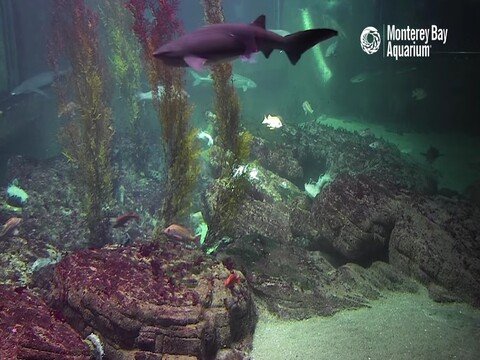
Because it is indoors, this one stays reliable in a way outdoor wildlife webcams never are, with no weather, no nightfall, and no waiting for an animal to wander back into shot. Feeding dives happen on a set schedule, California time (eight hours behind London), and a diver in the tank pulls everything in close. The aquarium also carries a moon jelly feed and a spider crab cam if you want something slower. For more of this, the site keeps a run of underwater webcams from reefs and tanks worldwide.
Sea otters at the Vancouver Aquarium, Canada
The Vancouver Aquarium otter cam is the feel-good choice of the group. Its rescued sea otters spend the day floating on their backs, grooming their impossibly dense fur, and cracking food against their bellies. They rest wrapped in strands of kelp, or holding paws, so they do not drift apart while they sleep.

Otters get busiest around feeding and enrichment times, when keepers drop toys and food into the water. Vancouver is on Pacific time, eight hours behind London, so the liveliest stretches on the Vancouver Aquarium otter cam land in the evening for European viewers. As with Monterey, it is a lit indoor tank, so the picture stays clear whatever the hour, though the otters do nap for long stretches around midday.
Are these wildlife webcams live at night?
Some are, most are not. The aquarium feeds in Monterey and Vancouver stay lit around the clock. The outdoor cams follow the sun, so a safari waterhole or a bear river drops into darkness once night falls in that time zone. A few outdoor sites add infrared, but assume any outdoor feed is daytime only unless it says otherwise.
The single most useful habit is to check the local time before you tune in. A cam in Kenya or Zimbabwe is already into the evening while North America is barely at breakfast. Dry season, salmon runs, and migration windows matter too, so the same cam can be packed one month and empty the next. It is worth skimming our roundup of the top 10 live webcams if you want a wider mix beyond animals. And if a feed freezes or shows an offline card, it is almost always a stream reset, so give it a few minutes or come back later.
Frequently asked questions
How can I tell if a wildlife cam is really live?
Look for details that cannot be faked on a loop: shifting shadows, wind moving through grass, a running clock or weather overlay, or a live viewer count on the player. Most cams in this list run as YouTube live streams, which show a red LIVE badge and the current number of people watching.
When is the best time to watch African safari cams?
Aim for early morning or late afternoon in local time, when animals move most and the heat eases off. Kenya and Zimbabwe both sit two to three hours ahead of London and seven to eight ahead of New York. The dry season, roughly May to October, pulls animals toward water and makes sightings far more likely.
Do zoo and aquarium cams count as wildlife cameras?
They show real animals in real time, so yes, even though the setting is managed rather than wild. The trade-off is reliability. The Monterey and Vancouver tanks are lit and stocked all year, so you get movement whenever you look, without weather or darkness shutting the view down the way an outdoor cam can.
What happens when a webcam goes offline?
Outdoor cams drop out for weather, power cuts, or routine maintenance, and you will often see a still photo or an offline card in place of the feed. It is nearly always temporary. Refresh the page, wait a few minutes, or open another cam and circle back to the first one a little later.
Pick one and press play
The easiest way in is to open a single cam that matches your mood right now, maybe bears in the cold Alaskan spray, maybe otters dozing in a warm tank, and let it run in a tab. When you want more, our full set of live wildlife webcams spans birds, safaris, reefs, and zoos across every continent.