
Live



Inlet Reef Club by Panhandle Getaways, Gulf Shore Drive, Destin, FL, USA
North Conway Golf Course, Norcross Circle, North Conway, New Hampshire, USA

Knott's Berry Farm, Beach Boulevard, Buena Park, CA, USA



Chicago & Northwestern Powerhouse, North Clinton Street, Chicago, IL, USA
E.J. and E. Griffith Interlocking Tower, East Avenue A, Griffith, IN, USA
Lock and Dam 19, North Water Street, Keokuk, IA, USA
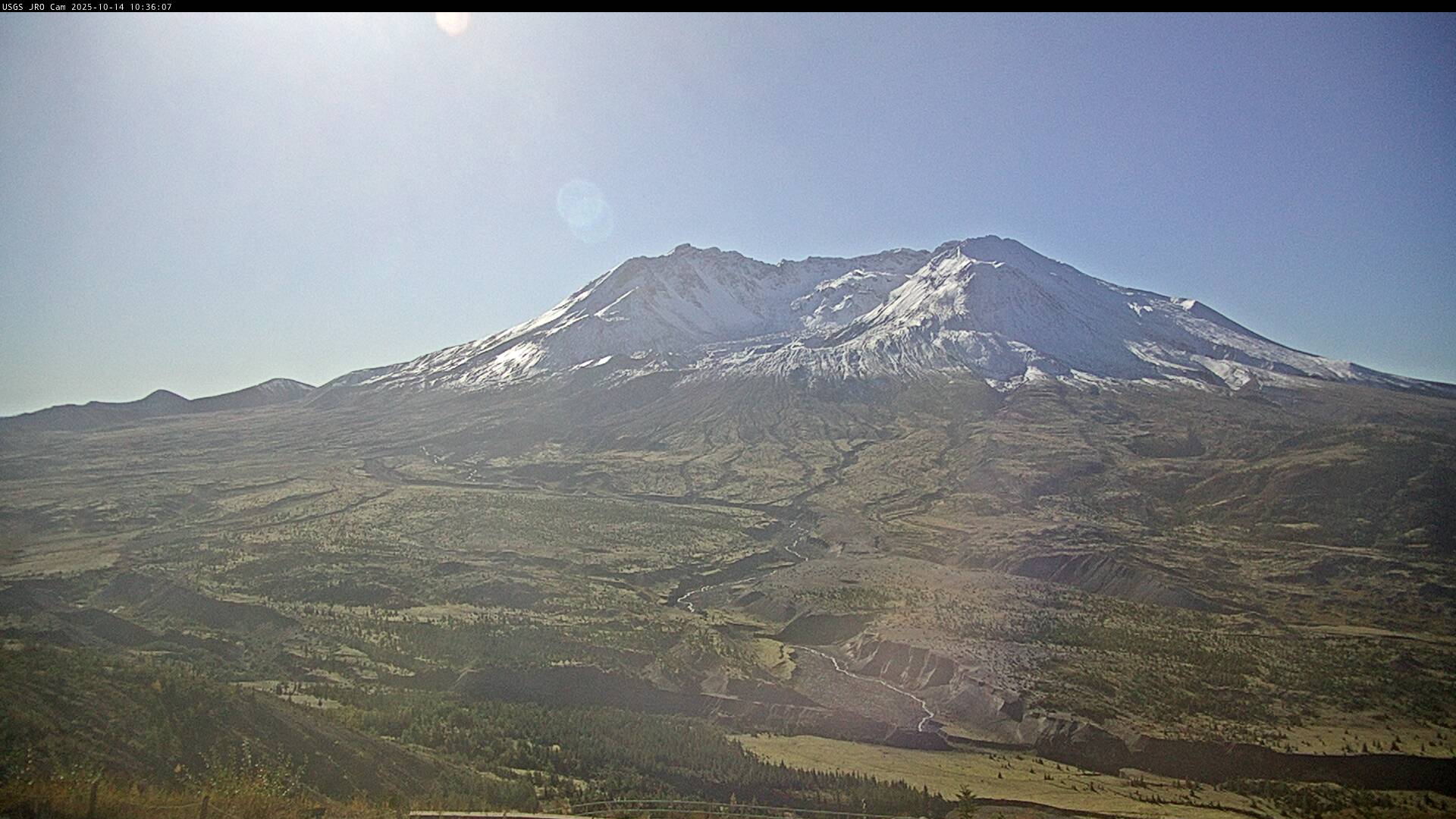
Watching the Mount St Helens webcam feels a bit like standing quietly at the edge of the Cascades, waiting to see what the mountain decides to show you today. Some days it is sharp and crystal clear, with every ridge and scar visible. Other days, clouds wrap around the summit and drift through the crater, reminding you how wild and unpredictable this place still is.
This webcam in Mount St Helens streams a real-time view of one of the most well-known volcanoes in North America. It is popular with hikers checking conditions, travelers planning a visit, and people who simply enjoy watching nature do its thing. The light changes constantly here. Morning often brings the clearest views, while afternoons can turn hazy as weather moves in from the Pacific.
For many viewers, the Mount St Helens live cam doubles as a weather cam. Snowstorms roll in quickly during winter, and spring fog can appear without warning. Even on calm days, there is a quiet tension in the landscape. You are looking at a mountain that famously reshaped itself in seconds, and that history is written clearly across the terrain. This Mount St Helens webcam makes it possible to feel connected to that story, even from thousands of kilometers or miles away.
Mount St. Helens sits in southwestern Washington State, roughly 96 kilometers or 60 miles south of Seattle and about 72 kilometers or 45 miles northeast of Portland. It is part of the Cascade Range, a chain of volcanoes created by tectonic forces along the Pacific coast. Before 1980, the mountain was known for its smooth, cone-shaped summit. That changed forever after its catastrophic eruption on May 18 of that year.
The eruption blasted away the northern face of the mountain, lowering its height and leaving behind a massive open crater. Entire forests were flattened, and nearby Spirit Lake was dramatically altered. Today, the surrounding area is protected as the Mount St Helens National Volcanic Monument, a place where scientists, hikers, and photographers can see how nature recovers after extreme events.
What makes this area especially interesting is the contrast. Dead trees still stand in some zones, while nearby hillsides are covered in green growth. Wildlife has slowly returned, and new ecosystems continue to form. When you watch the Mount St Helens webcam, you are not just seeing a mountain. You are watching an ongoing recovery story unfold in real time.
Weather plays a huge role in what you see on the Mount St Helens live webcam. Summer tends to be the most reliable season for clear views, with daytime temperatures usually between 10 and 21°C or 50 to 70°F. These months are ideal for hiking and sightseeing, and the webcam often shows long stretches of blue sky.
Fall brings cooler air and a moodier feel. Temperatures drop closer to freezing at higher elevations, and clouds become more common. Winter completely transforms the scene. Snow piles up quickly, sometimes several meters or many feet deep, and the mountain can disappear behind storms for days at a time. During these months, the Mount St Helens weather cam is especially useful for checking conditions before any travel.
Spring is unpredictable but fascinating. Snowmelt, fog, and sudden sunshine can all appear in the same day. If you enjoy watching landscapes change hour by hour, this is a great season to keep an eye on the webcam.
Seeing Mount St Helens on a webcam often inspires people to visit in person. One of the top spots is Johnston Ridge Observatory, where clear days offer an unforgettable view straight into the crater. The drive itself is scenic, winding through forests and viewpoints shaped by the 1980 eruption.
Hiking is a big draw from late spring through early fall. Trails range from short, family-friendly walks to demanding routes with elevation gains of more than 1,500 meters or 5,000 feet. Harry’s Ridge is a favorite for its views of Spirit Lake and the blast zone. For experienced climbers, summiting Mount St Helens is possible with a permit and good weather.
Nearby areas offer camping, picnic spots, and quiet roads perfect for photography. Small towns around the monument provide basic services, fuel, and casual dining. Most visitors arrive by car, and checking the Mount St Helens webcam beforehand helps avoid surprises from weather or visibility changes.
Washington live webcams
Leavenworth live webcam
Stevens Pass webcam
Does the Mount St Helens webcam run all the time?
Yes, the webcam operates year-round, though visibility depends heavily on weather conditions.
Can you see the crater clearly on the live cam?
On clear days, the crater is visible, especially from higher vantage points like Johnston Ridge.
Is this a traffic cam?
No, but the webcam can help you judge weather that may affect nearby roads.
What season shows the best views?
Late summer usually offers the clearest and most stable conditions.
Is Mount St Helens still considered active?
Yes, it remains an active volcano and is closely monitored by scientists.
Source: USGS