
Live
Stream hours: Live daily from 6 am until 7 pm Swiss time. From 7 pm to 6 am the stream replays the day's 1 pm to 2 pm recording, marked by a banner in the top left corner.
 09:01:33
 -4.3°C / 24.3°F
 Overcast Clouds
 77%
 4 km/h / 2 mph
 07:50
 18:21
Loading forecast…


Hotel Rischli, Rischlistrasse, Sörenberg, Switzerland
 2.5°C / 36.5°F
09:01



Aquapark Aan de Plas Brugge, Blankenbergse Dijk, Bruges, Belgium
 11.6°C / 52.9°F
09:01
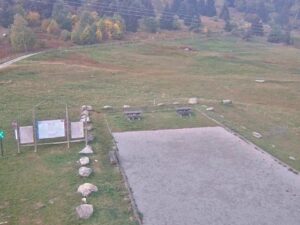
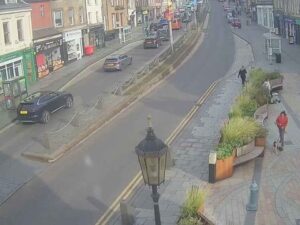
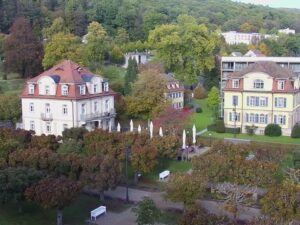
The Swiss Alps Webcam is feratel’s round trip through Switzerland’s mountains: one stream that cuts between 48 of its cameras, holding each view for 21 or 22 seconds. A full loop takes 17 minutes. It starts above the Upper Engadin lakes, runs through Davos and Klosters, dips into Ticino, crosses central Switzerland and the Jungfrau region, and ends in Valais at Saas-Fee before a last look at Geneva. A caption panel along the bottom names every stop with its altitude, the local time and the temperature. The stream is live from 6 am to 7 pm Swiss time. Overnight it replays that day’s recording from 1 pm to 2 pm, so the pictures stay bright, and live views return at 6 am without anything needing to be reloaded.
The Alps cover 60 percent of Switzerland’s 41,285 square kilometers (15,940 square miles), and 48 of the 82 alpine four-thousanders stand inside its borders. The highest is the Dufourspitze, at 4,634 meters (15,203 feet). The Aletsch Glacier, the largest and longest in the Alps, lies just over the ridge from Bettmeralp and Riederalp, two stops on this tour.
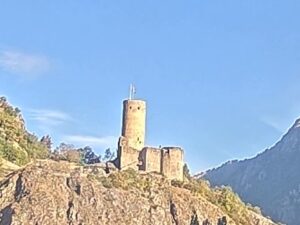
The Engadin comes first. The Corvatsch camera, at 3,303 meters (10,837 feet), looks down on Lake Silvaplana and its village, and more cameras follow at Piz Nair, Corviglia, Muottas Muragl, Pontresina, La Punt and Celerina. Scuol, Klosters and three Davos views follow, then Savognin, Vals and the Mundaun slopes above Surcuolm and Obersaxen. In Ticino, the Bellinzona camera looks across the town’s medieval castle walls. The northeast brings the Hoher Kasten above Brulisau, Bad Ragaz, Elm and two Flumserberg cameras. The one on the Maschgenkamm, at 2,020 meters (6,627 feet), faces the jagged limestone wall of the Churfirsten across the Walensee. Central Switzerland adds Oberiberg, Stoos, Emmetten, the Klewenalp above Beckenried and Sorenberg.
The Bernese Oberland section runs through Grindelwald, where the camera stands at 2,167 meters (7,110 feet), then the Jungfraujoch, the Schilthorn, Gstaad, Adelboden and Lenk, with Rougemont just over the line in Vaud. Valais closes the loop at Wiler in the Lotschental, at Riederalp, at Bettmeralp, whose Wurzenbord camera at 2,224 meters (7,297 feet) overlooks the village and a small lake, and at Saas-Fee, filmed from the Hannig at 2,339 meters (7,674 feet) and from the Mittelallalin. Zurich, Basel and Geneva are the only lowland stops. Music plays under the pictures, much of it by musicians from the Tyrolean label Northchain Records.
Altitude changes the picture more than the calendar does. Davos, at 1,594 meters (5,230 feet), averages highs of 0 C (32 F) and lows of -8.8 C (16 F) in January, and about 452 centimeters (178 inches) of snow falls there over 68 snowy days in a typical year (1991 to 2020 normals). Spring comes late. April highs reach 8.3 C (47 F), but nights still drop to -2 C (28 F), so the ski stops on the tour can stay white well after the valleys turn green.
July in Davos peaks at 18.5 C (65 F) by day and 7.6 C (46 F) at night. October cools to 10.8 C (51 F) by day and 0.8 C (33 F) at night, the month when the first snow tends to dust the summits. Higher up, summer barely registers. The Jungfraujoch weather station averages a July high of just 3.4 C (38 F), against -9.5 C (15 F) in January and a yearly mean of -6.7 C (20 F), which is why the glacier and summit cameras show snow in every month of the year.
Most stops on the tour are lift stations you can ride up to. The Jungfrau Railway climbs from Kleine Scheidegg to the Jungfraujoch, where the station at 3,454 meters (11,332 feet) is the highest in Europe. On the other side of the Lauterbrunnen valley, the Piz Gloria restaurant on the 2,970-meter (9,744-foot) summit of the Schilthorn turns a full circle every 45 minutes. It played a starring role in the 1969 James Bond film On Her Majesty’s Secret Service.
In central Switzerland, the Stoosbahn has run from Schwyz up to the village of Stoos since December 2017. With a maximum gradient of 110 percent it is the steepest funicular in the world, climbing 744 meters (2,441 feet) over 1.7 kilometers (1.1 miles), and the Fronalpstock above the village is one of the cameras. To cross the range by rail, the Glacier Express takes about eight hours between Zermatt and St. Moritz by way of Andermatt. It tops out at the Oberalp Pass, 2,033 meters (6,670 feet) up.
To stay on one mountain view for longer, try these cameras.
The Swiss Alps are the part of the Alps that lies inside Switzerland, and they cover 60 percent of the country. Every camera on this stream is in Switzerland, from Scuol in the east to Geneva in the west.
A loop of 48 feratel cameras, each shown for 21 or 22 seconds, covering the Engadin, Davos and Klosters, Ticino, central Switzerland, the Bernese Oberland and Valais, plus Zurich, Basel and Geneva. Most are mountain panoramas from lift stations, some looking over lakes such as Lake Silvaplana. A caption names each place with its altitude, the local time and the temperature.
Watch the high stops to find out. Corvatsch at 3,303 meters (10,837 feet), the Jungfraujoch and Saas-Fee’s Mittelallalin show whether snow is lying up high, while Davos and Klosters show how far down it reaches.
Yes, on the glaciers and the highest summits. The Jungfraujoch averages a July high of only 3.4 C (38 F), so the glacier cameras stay white all year. Lower stops such as Davos, where July highs reach 18.5 C (65 F), turn green once the snow melts.
It depends on the altitude. Davos, at 1,594 meters (5,230 feet), averages a January low of -8.8 C (16 F). At the Jungfraujoch even the average January high is -9.5 C (15 F), and the yearly mean there is -6.7 C (20 F).
No. The cameras broadcast live from 6 am to 7 pm Swiss time. From 7 pm until 6 am the stream replays a recording made between 1 pm and 2 pm, and a banner in the top left corner says so. The temperature and clock in the caption stay current during the replay.
No. Neither is in the current line-up. The closest stops to Zermatt are the two Saas-Fee cameras in the next valley to the east, and the Glacier Express passes through Andermatt on its way between Zermatt and St. Moritz.
Source: feratel
The best new live webcams and site features, once a week.
By subscribing you agree to receive our weekly email. Unsubscribe any time.
 5.8°C / 42.4°F
 0.2°C / 32.4°F
 9.2°C / 48.6°F
 9.5°C / 49.1°F
 6.8°C / 44.2°F