
 English
 简体中文
 Deutsch
 Français
 Español
 Nederlands
 Svenska
 Italiano
 日本語
 Polski
 Português
 Русский
 Ελληνικά
 العربية
 Türkçe

Live
 04:43:34
 5.8°C / 42.4°F
 Light Rain
 89%
 3 km/h / 2 mph
 06:32
 16:33
Loading forecast…

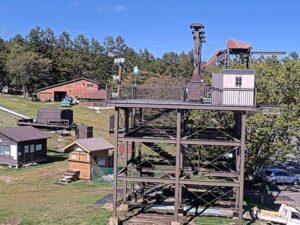

Kappa Bridge, Kamikochi, Kamikochi Azumi, Matsumoto, Nagano, Japan
 1.8°C / 35.2°F
04:43
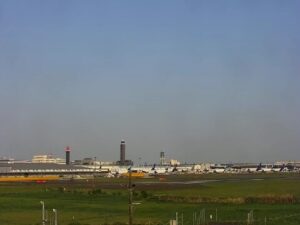
Narita International Airport (NRT), 1-1 Furugome, Narita, Chiba, Japan
 15°C / 59°F
04:43
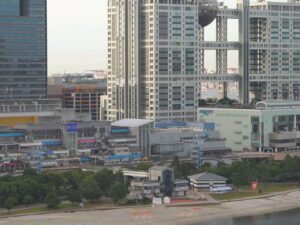

Hiroshima Airport (HIJ) (HIJ), 64-31 本郷町善入寺 Mihara, Hiroshima, Japan
 11°C / 51.8°F
04:43
Kusasenri Observatory, 1662-9 Nagakusa, Aso, Kumamoto, Japan
 9.5°C / 49.1°F
04:43


Peace Memorial Park, Nakajimachō, Naka Ward, Hiroshima, Japan
13.6°C / 56.5°F
04:43
The Oshino Hakkai Webcam looks southwest over a spring-fed pond in the village of Oshino, Yamanashi, with thatched roofs across the water and Mount Fuji rising above the wooded hills on the left of the frame. The camera belongs to Fujigoko.TV, which runs more than 30 cameras around the mountain, and it streams in 4K day and night. Oshino Hakkai is a group of eight springs fed by water that soaks into the slopes of Fuji and resurfaces on the valley floor, and the view of the mountain from here has its own name, Oshino Fuji. The scene shifts through the day: crowds and umbrellas along the railings at midday, the snow cap still showing against a dark sky on clear nights, and whole days when cloud hides the summit completely.
Oshino Hakkai sits at about 931 meters (3,054 feet) in a basin on the north side of Mount Fuji, whose 3,776 meter (12,389 foot) summit is 14.6 kilometers (9.1 miles) southwest of the camera. The basin once held a lake, Lake Oshino. When it dried out, the outlets of its springs survived as ponds. Their water is rain and snowmelt that sinks into the lava layers of Fuji, plus groundwater from the foothills between Mount Shakushi and Mount Ishiwari, rising here under pressure. The flat valley floor became rice land, and the springs supplied water for drinking and for the fields. The outflow still runs into the Shin-Nasho River and on to the Katsura River, which starts at Lake Yamanaka.
The name means the eight seas of Oshino. It comes from the Fuji-ko pilgrims, who walked a circuit of eight springs and purified themselves in the ponds before climbing the mountain. In 1843 a guardian deity, one of the Eight Dragon Kings, was enshrined at each pond, and a numbered pilgrim route was laid out from Deguchi-ike, the first, to Shobu-ike, the eighth. The springs became a national Natural Monument in 1934, joined Japan’s list of the 100 best waters in 1985, and on June 22, 2013 were inscribed as one of the 25 component parts of the Fujisan World Heritage Site.
From its raised position, the camera follows a paved path that curves down the left side of the frame past a stone-edged pond with a small planted island, while a long thatched building with a wooden veranda fills the far bank and modern two-story houses close off the right edge. Tourism here began around 1960, sold on exactly this pairing of thatched roofs and the mountain behind them, and grew fast after the 1985 listing. Not every pond in the village is one of the eight, though. Nakaike, the large pond beside the Ikemoto souvenir shop, was dug on the site of an inn’s tennis court, and the carp pond at the Hannoki Bayashi Museum is man-made too. Oshino itself is a village of about 9,700 people.
The nearest long-term record comes from the Japan Meteorological Agency station at Yamanaka, in the neighboring village of Yamanakako, and it describes a cold mountain climate. January averages a high of 4.0°C (39°F) and a low of -8.9°C (16°F), and on winter mornings mist can rise off the ponds and drift across the frame. Winter is also when the snow on Fuji reaches furthest down the cone; the summit carries snow for about five months of the year. Spring warms slowly, with April highs of 14.5°C (58°F) and lows of 1.4°C (35°F).
August is the warmest month, averaging 26.6°C (80°F) by day and 16.8°C (62°F) at night, and October cools to 16.9°C (62°F) and 6.7°C (44°F). The area is wet, with about 2,290 millimeters (90 inches) of precipitation a year, and on rainy days the mountain can vanish from the picture entirely. Because the camera faces southwest, the late autumn afternoon sun sinks beside the right shoulder of the cone, turning the mountain into a silhouette with glare across the image. Mornings, with the sun behind the camera, usually give the clearest front-lit view of the snow.
Start with the ponds themselves. Most visitors circle the seven ponds grouped around Wakuike, the deepest of the eight, and skip Deguchi-ike, which sits apart from the rest. Kagami-ike and Shobu-ike also draw smaller crowds. The village water mill pumps its water from Wakuike, and every year on August 8 the Hakkai Festival honors the Eight Dragon Kings who guard the springs. Oshino Ninja Village, a theme park built around ninja and the Sengoku period, is 1.4 kilometers (0.8 miles) west.
Fujiyoshida lies a short drive northwest. Mt. Fuji Station on the Fujikyuko Line, at 809 meters (2,654 feet), is 4.2 kilometers (2.6 miles) away. Arakurayama Sengen Park, 5.4 kilometers (3.3 miles) northwest, frames Mount Fuji behind a red five-story pagoda, with about 650 cherry trees on the hillside. Fuji-Q Highland, open since 1968, is 5.6 kilometers (3.5 miles) away with its roller coasters and the Thomas Land children’s area. To the southeast, Lake Yamanaka is the largest and highest of the Fuji Five Lakes at 980.5 meters (3,217 feet), and the only one with a natural outflow. Lake Kawaguchi, the lowest of the five, lies beyond Fujiyoshida to the northwest.
For more of Japan’s mountains and volcanoes, try these cameras next.
Oshino Hakkai is in the village of Oshino, Minamitsuru District, Yamanashi Prefecture, on the north side of Mount Fuji. It is 14.6 kilometers (9.1 miles) northeast of the summit and 4.2 kilometers (2.6 miles) from Mt. Fuji Station in Fujiyoshida.
A stone-edged pond with a small island, a paved path along the left side, thatched buildings across the water and Mount Fuji above the hills on the left. Visitors fill the railings for much of the day.
Cold in winter and mild in summer. January averages 4.0°C (39°F) by day and -8.9°C (16°F) at night, while August reaches 26.6°C (80°F).
Clear mornings, when the sun behind the camera lights the snow. Late autumn afternoons put the sun beside the cone, and rain can hide the mountain all day.
Yes. The buildings are lit in the early evening, and later a single lamp lights the path. On clear nights the snow cap of Fuji stays visible against the dark sky.
Yes. On June 22, 2013 the eight springs were inscribed as one of the 25 component parts of the Fujisan World Heritage Site. They have also been a national Natural Monument since 1934.
From rain and snowmelt that sinks into the volcanic layers of Mount Fuji and the nearby foothills, then rises under pressure in the old lake basin at Oshino.
Source: Fujiyama.TV (Fujigoko.TV)
The best new live webcams and site features, once a week.
By subscribing you agree to receive our weekly email. Unsubscribe any time.
 13.9°C / 57°F