
Live
Mississippi Headwaters, Minnesota
Lake Itasca, Itasca State Park, Minnesota, USA
 5.5°C / 41.9°F
 20:01
20:01 20:01:26
 10.4°C / 50.7°FOvercast Clouds
 46%
46% 10 km/h / 6 mph
 07:38
07:38 18:00
18:00Loading forecast…
Lake Itasca, Itasca State Park, Minnesota, USA
5.5°C / 41.9°F
20:01
Dog Day Getaway, Felton Court, Apple Valley, Minnesota, USA
11.2°C / 52.2°F
20:01
Hyland Hills Ski Area, Chalet Road, Bloomington, Minnesota, USA
11.2°C / 52.2°F
20:01






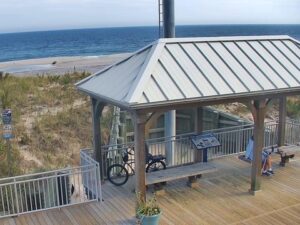
Seaside Heights, Barnegat Peninsula, New Jersey, USA
 12.4°C / 54.3°F
21:01
12.4°C / 54.3°F
21:01The Split Rock Lighthouse Webcam is mounted right beside the tower, close enough that the 16 meter (54 foot) light fills the right of the frame and the twin diaphone fog horns cut across the corner above it. Lake Superior takes the left, running out past a low wooded headland. The station stands on a 40 meter (130 foot) cliff in Lake County, Minnesota, and the water sets the mood of the shot: pale and flat on a calm morning, dark blue under a high sun, grey and broken when wind runs down the lake. Fog is the regular visitor here. A diaphone signal ran here from 1936 until 1961, and the lake can still close in fast enough to take the horizon out of the picture.
The station exists because of one storm. In November 1905 the Mataafa Storm tore across the Great Lakes, damaging or destroying 29 vessels and killing 36 seamen, and the steamship SS Mataafa that gave the storm its name broke apart within sight of Duluth. Shipping interests pressed for a light on this stretch of the North Shore, and the United States Lighthouse Service built one. Engineer Ralph Russell Tinkham designed it, the whole station cost $75,000 including the land and the buildings, and the lamp was first lit on July 31, 1910.
Building it was the hard part. No road reached this cliff in 1910, so every sack of cement and every piece of the tower arrived by water and went up the cliff face on a crane. The light was a third order bivalve Fresnel lens from Barbier, Bernard and Turenne of Paris, smaller than the second order lens first specified because the budget would not stretch to it. The Type F-2-T diaphone fog signal was added in 1936, electrified in 1940 and discontinued in 1961. Highway 61 reached the shore in 1929 and turned a working light into a destination.
The light was deactivated in 1969. The Minnesota Historical Society now runs the tower, the keepers’ houses and the fog signal building as a museum that takes roughly 160,000 visitors a year, and the site became a National Historic Landmark on June 30, 2011. One night a year the beacon still turns: every November 10 it is lit for the Edmund Fitzgerald, which went down on that date in 1975.
This is a humid continental climate with a very large, very cold lake pressed against it, and the water moderates the shore more than inland Minnesota numbers would suggest. Winter is long. January at Two Harbors, the nearest city, averages a high near -8 C (18 F) and a low around -14 C (6 F), and roughly 147 centimeters (58 inches) of snow falls in an average year. In January snow sits on every brick ledge and on the roofs below the tower, and the lake behind stays dark against a white shore. Lake Superior averages about 8 C (46 F) off this shore across the year, cold enough that it never really warms.
Summer is short and mild. July highs run around 27 C (81 F) and nights rarely drop below 13 C (55 F), which is why the North Shore fills up when the rest of the state turns humid. Spring is the awkward season, because the land warms while the lake does not, so fog forms readily and can sit over the water for days. Fall gives the Split Rock Lighthouse Webcam its best light of the year: clear air, a low sun that rakes the cliff from the southeast, and the color that draws traffic up Highway 61. It is also when the gales begin, which is the weather the station was built for.
The tower stands inside Split Rock Lighthouse State Park: 890 hectares (2,200 acres), about 6.4 kilometers (4 miles) of rocky Lake Superior shoreline and 23.3 kilometers (14.5 miles) of trail for hiking, biking and cross country skiing. The Superior Hiking Trail runs through the park, and a paved stretch of the Gitchi-Gami State Trail follows the shore for riders who would rather stay off the highway. Day Hill is the short climb worth making, a headland above the station with a freestanding stone fireplace from around 1900 on top. The Split Rock River drops through ten waterfalls, none of them marked on the park map.
Camping here is deliberately awkward and better for it. The park has 20 cart in campsites, where gear goes onto a provided cart and gets wheeled to the site, plus four backpack sites along the shore, two of them reachable by sea kayak. Gooseberry Falls State Park lies down the shore toward Duluth and was the only Minnesota state park on Lake Superior before 1945, the year both Split Rock and Tettegouche were established.
The Split Rock Lighthouse Webcam pairs well with these, from Lake Superior and from light stations elsewhere on the Great Lakes:
In Beaver Bay Township, Lake County, on the North Shore of Lake Superior in Minnesota. Two Harbors is the nearest city, 32 kilometers (20 miles) south. The tower stands inside Split Rock Lighthouse State Park, just off Highway 61.
The tower at close range, its lantern room and gallery, the twin fog horns in the upper corner, and Lake Superior filling the left of the frame. The scene changes with the weather rather than to a schedule: flat water and haze on calm mornings, whitecaps when the wind comes down the lake, fog that hides the horizon, and snow in winter.
Winter is long and cold, with January highs near -8 C (18 F) and about 147 centimeters (58 inches) of snow in an average year. July highs reach around 27 C (81 F). The lake stays near 8 C (46 F) year round, which keeps the shore cool and makes spring fog common.
The tower itself is 16 meters (54 feet). Its reach comes from the cliff underneath, which rises about 40 meters (130 feet) straight out of Lake Superior.
Because of the Mataafa Storm of November 1905, which damaged or destroyed 29 vessels on the Great Lakes and killed 36 seamen. The United States Lighthouse Service completed the station in response in 1910, at a cost of $75,000.
No. It was deactivated in 1969 and the station is now a museum run by the Minnesota Historical Society. The beacon is lit once a year, on November 10, for the Edmund Fitzgerald.
Roughly 77 kilometers (48 miles) by road: 45 kilometers (28 miles) from Duluth to Two Harbors, then another 32 kilometers (20 miles) north on Highway 61.
Source: Duluth Harbor Cam
The best new live webcams and site features, once a week.
By subscribing you agree to receive our weekly email. Unsubscribe any time.
 16.1°C / 61°F
 12.7°C / 54.9°F