Live

 19:58:11
 17.6°C / 63.7°F
 Overcast Clouds
 81%
81% 2 km/h / 1 mph
 05:54
05:54 17:31
17:31Loading forecast…

Cih-hu Memorial Statue Park, Section 1, Fuxing Rd, Daxi District, Taoyuan City, Taiwan
27.5°C / 81.5°F
19:58
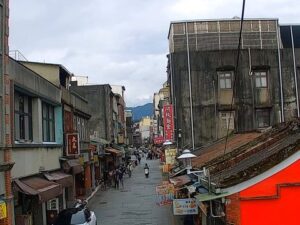
Daxi Old Street, Daxi District, Taoyuan, Taiwan
28.4°C / 83.1°F
19:58



Hiroshima Airport (HIJ) (HIJ), 64-31 本郷町善入寺 Mihara, Hiroshima, Japan
19.6°C / 67.3°F
20:58

House of Sanskara, Ban Tai, Ko Phangan, Surat Thani, Thailand
31.1°C / 88°F
18:58The Fenqihu Webcam watches the railway station at Fenqihu, a mountain village on the Alishan Forest Railway in Chiayi County, Taiwan. The camera turns through a set of fixed views: the timber loco shed with the narrow-gauge tracks curving past it toward the houses, the platform where the trains stop, the paved plaza and road junction below the station, and a wide shot over the rooftops to the forested ridges. Day visitors, delivery trucks and scooters cross the plaza, and the light can change from clear blue sky to drifting mist in the space of a morning. The Alishan National Scenic Area Administration runs the stream, which has been on air since February 2025, with help from a local cafe and the village’s farm produce center.
Fenqihu station stands at 1,403 meters (4,603 feet), about 45.5 kilometers (28 miles) up the line from Chiayi on the plains. The village fills a basin with mountains on three sides, which explains the name: the old Taiwanese name meant “dustpan lake”, and the lake is the basin itself, since there is no water here. Houses step up the slopes around the station, which is why Fenqihu is sometimes called the Jiufen of southern Taiwan.
Trains reached the village in 1912, and the station became the biggest maintenance stop on the line. Steam engines took on water and coal here and were changed for fresh ones, and because the trains tended to arrive around noon, crews and passengers stopped to eat. That habit started the railway bento trade the village is still known for. The station yard has five tracks, all laid to a narrow 762 mm (2 feet 6 inches) gauge, and at midday a red and cream diesel train can be seen waiting at the covered platform.
The large cypress-wood building with the grey roof that fills the main view of the Fenqihu Webcam is the Fenqihu Loco Shed, the only wooden survivor of the three big engine sheds on the line. It stopped working as a shed in 1985 and now holds a display of steam locomotives, including the retired No. 18 Shay. Landslides closed the railway in 2009. Trains returned to Fenqihu in January 2014, and through services to Alishan resumed in July 2024 once Tunnel 42 was finished.
At this height Fenqihu stays mild all year. Normals from the Central Weather Administration station in the village (2016 to 2023) give January highs of 17.7 C (64 F) and lows of 9.6 C (49 F), and July highs of 24.8 C (77 F) with lows of 17.8 C (64 F). October sits in between, at 22.6 C (73 F) by day and 15.7 C (60 F) at night. The coldest reading on record is 0.3 C (32.5 F) and the hottest 29.2 C (84.6 F), so the swing from season to season is small.
Rain is the bigger story. About 3,660 mm (144 inches) falls in an average year, most of it from May to September, and August alone averages 830.9 mm (32.7 inches). November gets just 40.2 mm (1.6 inches), which makes late autumn and winter the driest time to visit. Humidity averages 90 percent and rain falls on about 168 days a year, so mist is a regular sight on the Fenqihu Webcam. On the day this post was written, a clear morning gave way to cloud drifting across the station yard by early afternoon, and the ridges behind the village faded to grey.
Fenqihu Old Street starts beside the station and runs for 500 meters (1,640 feet) along the hillside, the highest old street in Taiwan. Its stalls sell local wasabi, aiyu seeds for jelly and tamarillo, and the wooden clogs exhibition hall next to the Fenqihu Hotel recalls the years when the village made clogs and its streets were paved with cinders. The railway bento is the thing to eat: the Fenqihu Hotel and FenChiHu EKIBEN at the station both sell boxed lunches. The Loco Shed sits right by the platforms, with a light show over its old engines every half hour.
For a walk, a path beside the Fenqihu Agricultural Product Exhibition and Sales Center climbs to a lookout platform with a view over the whole settlement. The Fenqi Trail passes the Luding Sacred Tree and the remains of a Japanese Shinto shrine, and the village is also known for its groves of square bamboo. The Guanghua Firefly-Watching Trail is at its best from April to June, while the Dadongshan Trail and the Green Tunnel are two more of the sights listed by the railway’s heritage office. Trains from Chiayi take about two and a quarter to two and a half hours.
Three more cameras for anyone drawn to old streets, mountain villages and high railway stations:
Fenqihu is in Zhuqi Township, Chiayi County, in the Alishan mountains of Taiwan. It is a stop on the Alishan Forest Railway, about 45.5 kilometers (28 miles) by rail from Chiayi.
The camera moves between several views of Fenqihu station: the cypress-wood loco shed with the tracks curving past it, the platform and its trains, the plaza and road junction below the station, and the village rooftops against the forested ridges. Mist often blows through in the afternoon.
Mild and wet. Average highs run from about 18 C (64 F) in January to 25 C (77 F) in July, and about 3,660 mm (144 inches) of rain falls a year, mostly from May to September. Humidity averages 90 percent.
The station and the camera are at 1,403 meters (4,603 feet). The weather station in the village is listed at 1,385 meters (4,544 feet).
The Alishan Forest Railway runs from Chiayi up to Fenqihu in about two and a quarter to two and a half hours. Since July 2024 the trains run on through to Alishan, a trip of about 1 hour 20 minutes between the two.
Railway bento. Trains used to stop here around noon, so crews and passengers bought boxed lunches at the station, and the village still sells them today. Its old street, the highest in Taiwan, and the wooden loco shed are the other draws.
No. The old Taiwanese name meant “dustpan lake”, a description of the basin the village sits in, with mountains on three sides. There is no lake in the village.
The best new live webcams and site features, once a week.
By subscribing you agree to receive our weekly email. Unsubscribe any time.
 11.4°C / 52.5°F
 22.3°C / 72.1°F
 26.8°C / 80.2°F
 25.7°C / 78.3°F