
Live

 18:12:31
 11.2°C / 52.2°F
 Broken Clouds
 50%
50% 13 km/h / 8 mph
 07:19
07:19 17:49
17:49Loading forecast…



St. Andrews Airport, St. Andrews, Manitoba, Canada
 15.4°C / 59.7°F
17:12
15.4°C / 59.7°F
17:12

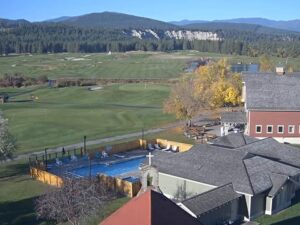
Cranbrook, East Kootenay, British Columbia, Canada
9.8°C / 49.6°F
16:12

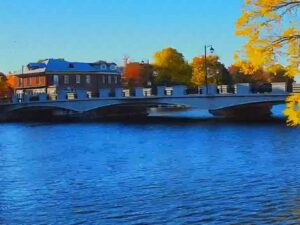
Carleton Place, Lanark County, Ontario, Canada
 12.3°C / 54.1°F
18:12
12.3°C / 54.1°F
18:12



The Saint-Felicien Zoo Webcam looks into the Japanese macaque habitat at the Saint-Felicien Wild Zoo, a 485-hectare wildlife park near the western shore of Lac Saint-Jean in Quebec. Japanese macaques are the snow monkeys of northern Japan, and the zoo picked this enclosure for its natural watering point, its hill and its woodland, so the troop can turn up on open ground, by the water or among the trees. A second tab switches to the polar bear habitat, where the camera looks down on one corner of the bears’ pool, with a bank of gravel, boulders and long grass rising behind it. The animals move freely through their habitats, so a quiet frame can simply mean they are resting out of shot.
The Saint-Felicien Wild Zoo opened on July 17, 1960, when Ghislain Gagnon and six others started it on an abandoned fox farm lent to them by Haldaige Laflamme. It now covers 485 hectares (1,198 acres) and holds close to 1,000 animals from about 80 species, with its focus on the wildlife of the boreal forest. The zoo is managed by the Centre for Conservation of Boreal Biodiversity and sits roughly 5 kilometers (3 miles) northwest of downtown Saint-Felicien, a town of 10,089 people (2021 census) near the mouth of the Ashuapmushuan River.
Its best-known ride is the Nature Trails Park, where enclosed trains carry visitors along a 7-kilometer (4.3-mile) circuit past animals living in semi-liberty and past reconstructions of a lumber camp, a colonial farm, a trading post and an Indigenous village. The walking zoo added an Asian side from 2007, when the Japanese macaque habitat opened. Japanese cranes followed in 2008, Amur tigers in 2009 and a Mongolian steppe zone in 2010, and the zoo is the only one in Canada to keep geladas. The macaque enclosure won a Canadian Association of Zoos and Aquariums award for major accomplishment in 2008, and several young macaques have been born there since.
The polar bear habitat is built around a pool with a glass wall, so visitors on the other side can watch the bears swimming underwater. The zoo made news in late 2018, when Aisaqvak gave birth to a cub on November 27 and staff spotted a second cub beside Milak in mid-December. Milak had arrived from Aalborg Zoo in Denmark in 2014. The camera on the second tab sits above the waterline rather than behind the glass.
Saint-Felicien has long, snowy winters. At the Environment Canada station in nearby Roberval, January averages a high of minus 11.1 C (12 F) and a low of minus 21.7 C (minus 7 F), and about 277 centimeters (109 inches) of snow falls in a typical year. Winter is when the macaques live up to their nickname: some troops in Japan live where snow covers the ground for months, and no primate apart from humans lives farther north or in a colder climate. On the camera, snow can cover the habitat for much of the season.
Summer is short and mild. July averages a high of 23.7 C (75 F) and a low of 12.9 C (55 F), and the bank behind the polar bear pool can stand thick with long grass. Spring and fall are quick transitions, with average highs of 7 C (45 F) in April and 9.8 C (50 F) in October. Annual precipitation at Roberval is about 865 millimeters (34 inches), so rain and wet snow can soften the picture on some days.
The Ashuapmushuan River runs 181 kilometers (112 miles) through narrow valleys, rapids and a dozen waterfalls before it meets Lac Saint-Jean at Saint-Felicien, and it is the lake’s third largest tributary. The lake itself covers 1,053 square kilometers (407 square miles) and is circled by the Blueberry Bike Trail, a 256-kilometer (159-mile) loop that can be cycled or walked in stages. On the north shore, Pointe-Taillon National Park has more than 15 kilometers (9.3 miles) of beaches and 45 kilometers (28 miles) of cycle paths.
About 24 kilometers (15 miles) southeast of the zoo, the Innu community of Mashteuiatsh runs the Mashteuiatsh Amerindian Museum, founded in 1977 to preserve Innu culture; the Innu name for the lake is Piekuakami. Further on, Val-Jalbert is a company town founded in 1901 around a pulp mill below the Ouiatchouan Falls, which drop 72 meters (236 feet). The mill closed in 1927 and the village emptied, leaving more than 70 original buildings in what has been called the best-preserved ghost town in Canada, about 37 kilometers (23 miles) from the zoo in a straight line.
For more monkeys, polar bears and Quebec views, try these cameras next.
The zoo is in Saint-Felicien, in the Saguenay-Lac-Saint-Jean region of Quebec, Canada, near the western shore of Lac Saint-Jean and roughly 5 kilometers (3 miles) northwest of the town center. Roberval lies to the south along the lake.
The main view covers the Japanese macaque habitat, set on ground the zoo chose for its water, hill and woodland. The second tab shows the polar bear habitat from above one corner of the pool, with a gravel and boulder bank and trees behind it.
Yes. Pick the Polar Bears tab above the player to switch to it. The zoo describes its bears swimming in the pool, playing with enrichment items and resting in the sun, and the pool has a glass wall on the visitor side.
Winters are long and cold, with January highs near minus 11 C (12 F) and about 277 centimeters (109 inches) of snow a year at nearby Roberval. July highs average about 24 C (75 F).
The habitats are outdoors and the macaque camera shows little after dark, so its picture can look black overnight even though the stream is still live. The polar bear camera switches to a black and white night image. Both brighten again after sunrise on their own.
Some troops in Japan live where snow covers the ground for months each year, and no primate apart from humans lives farther north. The Saint-Felicien habitat opened in 2007.
It covers 485 hectares (1,198 acres) with close to 1,000 animals from about 80 species. Part of it is the Nature Trails Park, toured by enclosed train on a 7-kilometer (4.3-mile) circuit.
Yes. In late 2018 two cubs arrived about two weeks apart, one to Aisaqvak on November 27 and one to Milak, first seen with her cub on December 11.
Source: Saint-Felicien Wild Zoo
The best new live webcams and site features, once a week.
By subscribing you agree to receive our weekly email. Unsubscribe any time.
 17.4°C / 63.3°F