
Live

 21:09:30
 11.5°C / 52.7°F
 Clear Sky
 53%
53% 12 km/h / 7 mph
 08:18
08:18 19:46
19:46Loading forecast…


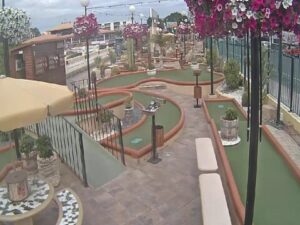
Yumbo Centrum, Avenida Estados Unidos, Maspalomas, Spain
 24.8°C / 76.6°F
20:09
24.8°C / 76.6°F
20:09
Sagrada Familia, Carrer de Mallorca, Barcelona, Spain
 17.1°C / 62.8°F
21:09
17.1°C / 62.8°F
21:09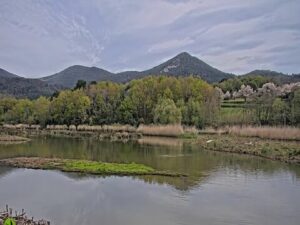
Urdaibai Bird Center, Orueta Auzoa, Spain
 18.1°C / 64.6°F
21:09
18.1°C / 64.6°F
21:09

Beach Castelldefels, Passeig Marítim, Castelldefels, Spain
18.3°C / 64.9°F
21:09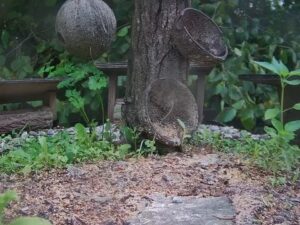
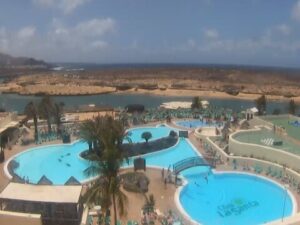

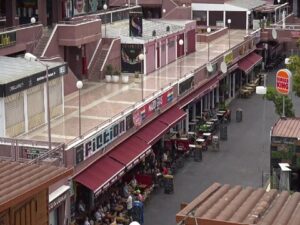
Playa del inglés gran canaria, Maspalomas, Spain
24.8°C / 76.6°F
20:09
Cruise Pirs Arrecife, Avenida de los Marmoles, Arrecife, Spain
24.1°C / 75.4°F
20:09


Alquiler de coches Girona Railway Station - blendcar, Carrer Bisbe Lorenzana, Girona, Catalonia, Spain
12.4°C / 54.3°F
21:09The Sierra Norte Bird Bath Webcam looks onto a shallow dish of water resting in the fork of a tree, in woodland in the Sierra Norte de Madrid, the mountain district that fills the north of Spain’s Community of Madrid. A thick, dark limb climbs the right side of the frame, and the forest behind melts into a soft blur of green and russet. It is Camera 22 of Directo Natura, which streams dozens of nature cameras from across Spain. The operator has recorded 24 bird species drinking and bathing here, from blue tits and robins to great spotted woodpeckers and Iberian magpies. Visits come in bursts. The water can sit still for a long spell, then a small bird drops onto the rim, drinks and leaves within seconds.
Directo Natura names the district on the stream but not the village or the property. The Sierra Norte is a comarca of 42 municipalities spread over about 1,253 square kilometers (484 square miles), home to close to 32,000 people. Its towns include Buitrago del Lozoya, Rascafria, Patones and Torrelaguna, and its hills hold three of the region’s best-known protected areas: the Hayedo de Montejo beech forest, the Sierra del Rincon Biosphere Reserve and part of the Sierra de Guadarrama National Park.
The 24 species on the operator’s list are mostly woodland birds of central Spain. Great tits, blue tits and crested tits share the rim with long-tailed tits, chaffinches, house sparrows, European serins and robins, while nuthatches and treecreepers come down from the trunks. Bigger visitors include the common blackbird, starlings, the Eurasian magpie, the wood pigeon and the great spotted woodpecker. The most local of them is the Iberian magpie, a slim bird with a black cap, a pale body and blue wings and tail that lives almost nowhere in Europe outside Spain and Portugal.
Several species on the list are seasonal. The common redstart, melodious warbler and pied flycatcher spend the summer in Spain and winter in Africa, so they belong to the warm months and the autumn passage, while blackcaps, chiffchaffs and robins tend to grow more numerous in the colder half of the year. Directo Natura says the camera runs without any disturbance to the birds, and it keeps the commentary in a Telegram group, where regulars identify species, describe behavior and read the numbered rings on banded birds.
The district sits high for central Spain. Buitrago del Lozoya, its main town, stands at 975 meters (3,199 feet), and the hills around it climb toward Penalara, the highest peak in the Community of Madrid. Winters are cold: January afternoons reach about 8 C (46 F), nights hover around 0 C (32 F), and on frosty mornings the shallow water in the dish can freeze over until the sun reaches the trees. Spring warms slowly, from highs of about 15 C (59 F) in April to 20 C (68 F) in May, and March through May bring a good share of the year’s 637 millimeters (25 inches) of rain.
Summer is hot and dry. July and August afternoons usually reach 28 to 30 C (82 to 86 F), nights drop to around 15 C (59 F), and July often passes with almost no rain. Natural water is scarce then, which is when the Sierra Norte Bird Bath Webcam tends to be at its busiest. Autumn turns the woodland behind the dish russet and gold, highs fall from about 19 C (66 F) in October to 12 C (54 F) in November, and those two months are among the wettest of the year.
Buitrago del Lozoya is the natural base. It is the only town in the Madrid region that keeps its full ring of walls, which are Moorish in origin, date to the 11th century, were restored in the 15th and became a national monument in 1931. The old town sits on a peninsula in a bend of the Lozoya River, with the Riosequillo reservoir to the west and Puentes Viejas to the east. Inside the walls, the Picasso Museum shows works from the collection of Eugenio Arias, a barber from Buitrago who befriended the painter.
For birds and walking, the Hayedo de Montejo near Montejo de la Sierra is a beech forest listed by UNESCO among Europe’s ancient beech woods, inside the Sierra del Rincon Biosphere Reserve declared in June 2005. To the west, the Lozoya valley leads to Rascafria and the Monastery of El Paular, founded in the 14th century as the first Carthusian monastery in Castile, beneath the peaks of the Sierra de Guadarrama National Park. On the eastern edge of the district, Patones de Arriba is a hillside maze of dark stone houses.
For more birds, and more of Spain, try one of these next.
It is in the Sierra Norte de Madrid, the mountain district in the north of the Community of Madrid in central Spain. Directo Natura does not publish the exact village. The district’s main town, Buitrago del Lozoya, stands at 975 meters (3,199 feet) on the Lozoya River.
A close view of a shallow water dish set in the fork of a tree, with a heavy branch on the right and blurred woodland behind. Small birds land on the rim to drink and splash, and larger ones such as woodpeckers and magpies come and go between quiet spells.
The operator lists 24 species, among them great, blue, crested and long-tailed tits, the robin, chaffinch, blackcap, nuthatch, wren, great spotted woodpecker and both the Eurasian and Iberian magpies.
Activity at a bath comes in short bursts, so the water can stay empty for long stretches. Visits also follow the season and the weather: after rain the birds find water everywhere, while hot, dry summer days tend to bring them in more often.
A slim member of the crow family with a black cap, a pale body and blue wings and tail. In Europe it is found almost only in Spain and Portugal.
Cold winters and hot, dry summers. January afternoons reach about 8 C (46 F) with frosty nights, while July and August highs usually sit between 28 and 30 C (82 and 86 F). Spring and autumn bring most of the rain.
Directo Natura is a Spanish project that streams nature cameras on YouTube, from bird feeders and baths to vulture nests, an amphibian pond and a hedgehog feeder. It numbers its cameras, and this bath is Camera 22.
Source: Directo Natura
The best new live webcams and site features, once a week.
By subscribing you agree to receive our weekly email. Unsubscribe any time.
 13°C / 55.4°F
 19°C / 66.2°F