Live
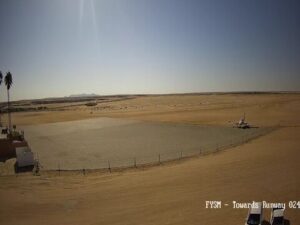
Swakopmund Airport (FYSM), Namibia
Swakopmund Municipal Aerodrome, Swakopmund, Namibia
 17°C / 62.6°F
 15:19
15:19 16:19:42
 30°C / 86°F
 Few Clouds
 28%
28% 26 km/h / 16 mph
 06:10
06:10 18:20
18:20Loading forecast…
Swakopmund Municipal Aerodrome, Swakopmund, Namibia
17°C / 62.6°F
15:19

Jetty 1905 Restaurant, On the Jetty Bridge, Swakopmund, Namibia
17.4°C / 63.3°F
15:19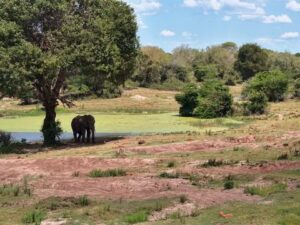
Tembe Elephant Park, KwaZulu-Natal, South Africa
 36.1°C / 97°F
15:19
36.1°C / 97°F
15:19



Kruger Shalati - The Train on the Bridge, Kruger National Park, Skukuza, South Africa
34.2°C / 93.6°F
15:19

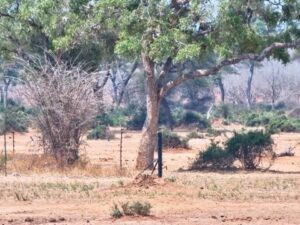
The Angama Amboseli Webcam streams from Kimana Sanctuary in southern Kenya, looking across open grassland and flat-topped acacias on the old elephant road between Amboseli National Park and the Chyulu Hills. Seed heads and low scrub fill the foreground, a broken line of trees marks the middle distance, and on clear mornings the bulk of Mount Kilimanjaro sits on the horizon behind them. Cloud usually builds over the mountain before midday and covers it until late afternoon, so the same frame looks like a different place at seven in the morning and at four in the afternoon. Elephants treat this ground as a corridor rather than a destination, which means the plain can stay empty for an hour and then carry a whole family group across it.
Angama Amboseli opened in November 2023 inside Kimana Sanctuary, a 5,700 acre (2,300 hectare) conservancy in Kajiado County, close to the border with Tanzania. The sanctuary is small by Kenyan standards, and its position matters far more than its size. It sits at the pinch point of a corridor that links Amboseli National Park, which covers 392 square kilometers (151 square miles), to the Chyulu Hills and on to Tsavo West National Park. Farmland and a working highway press in from either side, so animals funnel through this ground instead of spreading across it.
The land belongs to Maasai owners who lease it through a partnership managed by the Big Life Foundation, an agreement worth about 11 million dollars over 25 years. That deal is the reason the grass in frame is grazed by wildlife rather than fenced and planted. Kimana is also one of the last places where Super Tuskers still range, the old bull elephants whose tusks grow long enough to reach the ground, so a sighting that is close to impossible elsewhere is at least plausible here.
The sanctuary floor lies at roughly 1,100 meters (3,600 feet), part of the wide plain that runs south toward the foot of Kilimanjaro. The mountain reaches 5,895 meters (19,341 feet) and stands across the border in Tanzania, due south of the camera. Time magazine named the camp one of its World’s Greatest Places in 2024.
Days here are warm and steady all year. Afternoon highs average about 28 C (82 F) and fall back to around 15 C (59 F) overnight. October is the warmest month at about 29.6 C (85 F) and December the coolest at about 26.6 C (80 F), so the gap between seasons is a few degrees rather than a change of climate. Night lows run from 15.6 C (60 F) in July to 18.9 C (66 F) in March. At 2.7 degrees south of the equator, daylight holds close to twelve hours the whole year, and the light shifts from flat and white in the middle of the day to long and gold in the last hour before dark.
Rain arrives in two spells. The long rains fall from mid March to mid May, with May the wettest month at about 106 millimeters (4.2 inches), and the short rains run from late October or November into mid December. Between June and September almost no rain falls, the grass in frame turns from green to straw, and dust off the dry lake bed can soften the far distance into haze by afternoon. Kilimanjaro is most often clear in the first couple of hours after sunrise and again near sunset, while through the middle of the day cloud usually sits on the summit.
Amboseli National Park lies immediately west of the sanctuary and is the obvious destination. Its 392 square kilometers (151 square miles) take in a dried Pleistocene lake bed and two of the ecosystem’s five main swamps, which hold water through the dry months and pull elephants, Cape buffalo and Masai giraffe into tight concentrations. The park lists more than 400 bird species, among them 47 raptors, alongside lion, cheetah, spotted hyena, Grant’s zebra, wildebeest and yellow baboon.
East and north of Kimana the corridor runs on into the Chyulu Hills and then to Tsavo West National Park, a far larger and emptier stretch of country. Closer to the sanctuary, the town of Loitokitok sits on the northern slopes of Kilimanjaro and serves as the supply point for this corner of Kajiado County. Big Life Foundation ranger teams patrol the sanctuary itself, and their work with the Maasai landowners is what keeps the corridor open. Nairobi is the nearest large city and the usual arrival point for anyone travelling to this part of southern Kenya.
Three more African cameras that pair well with this view.
It sits in Kimana Sanctuary in Kajiado County, southern Kenya, close to the Tanzanian border. The sanctuary lies just east of Amboseli National Park, on the corridor that carries wildlife toward the Chyulu Hills and Tsavo West.
Open grassland scattered with flat-topped acacias, a tree line across the middle distance, and Mount Kilimanjaro on the southern horizon when cloud allows. Elephants, giraffe, zebra and buffalo move through the frame, though the plain is often empty between crossings.
Yes, when the weather cooperates. The mountain stands 5,895 meters (19,341 feet) high in Tanzania, due south, and is usually clearest in the first hours after sunrise and again toward sunset. Cloud commonly hides it through the middle of the day.
Warm and dry for most of the year. Daytime temperatures average about 28 C (82 F) and nights drop to around 15 C (59 F). The long rains fall from mid March to mid May and the short rains from late October to mid December.
Elephants are the headline species, including Super Tuskers, and the wider Amboseli ecosystem also holds lion, cheetah, spotted hyena, Cape buffalo, Masai giraffe, Grant’s zebra, wildebeest and yellow baboon, plus more than 400 species of bird.
About 5,700 acres (2,300 hectares). It is leased from Maasai landowners through a partnership managed by the Big Life Foundation, worth roughly 11 million dollars over 25 years.
Old bull elephants whose tusks have grown long enough to reach the ground. They are rare across Africa, and Kimana Sanctuary and the wider Amboseli ecosystem count as one of their last remaining refuges.
Early morning and late afternoon in Kenyan time, which is three hours ahead of UTC. Animals move most in the cooler hours, and those are also the windows when Kilimanjaro is most likely to be out from behind cloud.
Source: Africam
The best new live webcams and site features, once a week.
By subscribing you agree to receive our weekly email. Unsubscribe any time.
 34.3°C / 93.7°F