
Live
Mori Point, Pacifica, California
Mori Point, Bradford Way, Pacifica, California, USA
 19.3°C / 66.7°F
 16:12
16:12 16:12:20
 19.7°C / 67.5°F
 Scattered Clouds
 72%
72% 20 km/h / 12 mph
 06:55
06:55 18:22
18:22Loading forecast…
Mori Point, Bradford Way, Pacifica, California, USA
19.3°C / 66.7°F
16:12



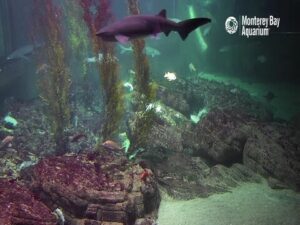
Monterey Bay Aquarium, Cannery Row, Monterey, CA, USA
19.2°C / 66.6°F
16:12


Mammoth Mountain, Mammoth Lakes, Mono County, California, USA
 4.4°C / 39.9°F
16:12
4.4°C / 39.9°F
16:12
Big Bear Valley Recreation and Park District, Park Avenue, Big Bear Lake, CA, USA
4.5°C / 40.1°F
16:12

Yosemite Valley, Sierra Nevada, California, USA
11.7°C / 53.1°F
16:12

The Aquarium of the Pacific Webcam looks into the Tropical Reef Habitat, the largest tank at the Aquarium of the Pacific in Long Beach, California. Rock pillars crusted with coral rise toward a brightly lit surface, and the water between them is full of fish: blue tangs along the rockwork, striped batfish drifting past the coral heads, red and purple reef fish, and reef sharks cruising through the middle of the frame. The exhibit is modeled on the coast of Palau and holds more than 1,000 animals. Three more tabs show the aquarium’s jellyfish, its Catalina Island kelp forest and a coral tank, all streamed by explore.org.
The Aquarium of the Pacific opened on June 20, 1998, on Rainbow Harbor in downtown Long Beach. It covers a 2.4 hectare (6 acre) site on a street of its own, Aquarium Way, across from Shoreline Village, the Long Beach Convention Center and the Queen Mary. More than 12,000 animals live in tanks ranging from 19,000 liters (5,000 US gallons) to 1.3 million liters (350,000 US gallons), and the aquarium drew 1.7 million visitors in 2018.
Its three permanent galleries cover Southern California and Baja, the Northern Pacific and the Tropical Pacific, so a walk through the building moves from cold local water to the warm western Pacific. The reef camera sits in the tropical gallery.
The Tropical Reef Habitat is home, in the aquarium’s own words, to over 1,000 animals “from the tiny cleaner wrasse to the zebra shark.” The camera faces a wall of rockwork built up into pillars and ledges, covered in branching corals, plate corals, leathery soft corals and round coral heads, with light moving across the surface at the top of the frame. Blue tangs and small purple fish with yellow tails stay close to the rock, banded batfish drift through the middle, and reef sharks pass in and out of view. During the aquarium’s live diver presentations, a scuba diver can appear among the fish.
Outside opening hours the stream keeps running but switches to recorded footage of the same reef, labeled HIGHLIGHT in the top left corner. The live picture comes back on its own during the day.
The Jellyfish Cam watches West Coast sea nettles, with amber to orange bells, long dark tentacles and pale, frilled oral arms, pulsing through a round tank lit in blue. This stream also plays recorded highlights at times, under the same label.
The Blue Cavern Cam looks into a 540,000 liter (142,000 US gallon) exhibit three stories high, built to recreate the water off Catalina Island. Kelp rises from the sand between grey boulders, and a giant sea bass, heavy and grey-spotted, can fill the whole picture when it swims up to the lens.
The Coral Predators Cam is tighter and calmer: brain corals and branching corals in blue, pink, yellow and white above a patch of pale sand. The tank is about animals that eat coral. Parrotfish scrape off chunks of reef to get at the algae in them and grind up dead coral with their teeth, which, the operator notes, can help a reef rather than harm it.
Weather never reaches these tanks, but it shapes a day on the harbor around them. Long Beach has a mild, dry climate. At Long Beach Airport, January averages 19.7 C (67.4 F) by day and 8.3 C (46.9 F) at night, April 21.9 C (71.4 F) and 12.2 C (53.9 F), and August 28.4 C (83.2 F) and 18.6 C (65.5 F). October still reaches 25.4 C (77.7 F).
Of the 305 millimeters (12.02 inches) of rain a year, 81 percent falls between December and March. Summer brings low cloud and fog that form overnight and usually clear by afternoon, so Rainbow Harbor can be grey on a July morning.
Inside the building, the exhibits these cameras do not cover include the June Keyes Penguin Habitat with its Magellanic penguins, the Sea Otter Habitat and a giant Pacific octopus tank. Shark Lagoon, outdoors, has a webcam of its own.
The Queen Mary, a retired ocean liner now run as a hotel and attraction, is permanently docked across the water. To see the real habitat behind the Blue Cavern exhibit, Catalina Express ferries leave from Catalina Landing in downtown Long Beach for Avalon on Santa Catalina Island, a crossing of about an hour.
More cameras on Pacific sea life, starting with the aquarium’s own shark exhibit.
The main camera looks into the Tropical Reef Habitat, a reef tank modeled on the coast of Palau, where reef sharks, batfish and blue tangs swim among coral-covered rock pillars. The other tabs show sea nettle jellies, the Blue Cavern kelp forest and a coral tank.
On Rainbow Harbor in downtown Long Beach, California, on its own street, Aquarium Way, across from Shoreline Village and the Queen Mary.
The stream runs around the clock, but when it was checked late in the evening and before dawn it was playing recorded footage of the same reef, marked HIGHLIGHT, instead of the live view. The live picture returns by itself during the day, Pacific Time.
No. None of the four cameras on this page looks into the penguin exhibit. The aquarium’s Magellanic penguins live in the June Keyes Penguin Habitat.
Mostly. The galleries, including the reef, jelly, kelp and coral tanks on this page, are inside the building. Shark Lagoon is outdoors.
Long Beach is mild all year, with average highs from 19.7 C (67.4 F) in January to 28.4 C (83.2 F) in August. Most rain falls between December and March, and summer mornings are often cloudy until the afternoon.
Source: Explore.org and Aquarium of the Pacific
The best new live webcams and site features, once a week.
By subscribing you agree to receive our weekly email. Unsubscribe any time.