
Live

 06:02:14
 18.5°C / 65.3°F
 Clear Sky
 88%
88% 2 km/h / 1 mph
 07:02
07:02 18:14
18:14Loading forecast…

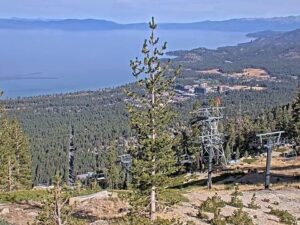
Mammoth Mountain, Mammoth Lakes, Mono County, California, USA
 -4.6°C / 23.7°F
06:02
-4.6°C / 23.7°F
06:02




Yosemite Valley, Sierra Nevada, California, USA
 -0.9°C / 30.4°F
06:02
-0.9°C / 30.4°F
06:02


The Catalina Underwater Webcam sits beneath the dock of the USC Wrigley Marine Science Center in Big Fisherman Cove, on the north shore of Santa Catalina Island off Southern California. It looks into the Blue Cavern Marine Protected Area, where eelgrass, sandy bottom and rocky reef kelp forest meet within a short swim of the pier. The Wrigley Institute names garibaldi and giant sea bass among the fish that turn up on this stream. The picture changes with the light and the water. On a calm, clear day sunlight reaches down into the cove, while a winter swell or a plankton bloom can turn the same view green and grainy. Explore.org runs the feed around the clock, and the current stream has been on air since June 2019.
Big Fisherman Cove is the inlet just northeast of Isthmus Cove at Two Harbors, the small village at the Isthmus of Catalina. The island lies about 20 miles (32 kilometers) off the Los Angeles coast, and USC puts its marine lab on the cove’s shore about 22 miles (35 kilometers) from Los Angeles. The Wrigley family donated the land to the University of Southern California in 1965 for a marine research lab, and construction finished in 1967. A further Wrigley gift in 1990 created the Wrigley Institute for Environmental Studies, and the lab became the Philip K. Wrigley Marine Science Center. The campus now covers 40 acres (16 hectares) with 30,000 square feet (about 2,790 square meters) of research and teaching space. A hyperbaric chamber donated by Lockheed in 1974 still operates on site.
The water under the dock has been protected for decades. The cove was first part of the Catalina Marine Science Center Marine Life Refuge, created in the late 1970s, and in 2012 it became part of the Blue Cavern Onshore State Marine Conservation Area. That onshore zone is no-take, so fishing is prohibited. It works alongside the Blue Cavern Offshore State Marine Conservation Area, where limited fishing for species such as yellowtail and Pacific bonito is still allowed. Together the two areas protect about 10 square miles (26 square kilometers), from the shoreline through kelp forest and rocky reef down to a sandy seabed as deep as 2,616 feet (797 meters). The cove also lies within an Area of Special Biological Significance, and in April 2024 the ocean group Mission Blue named Blue Cavern a Hope Spot. Nine marine protected areas ring the island in all.
The operator describes eelgrass and elk kelp beds, sandy patches and rocky reef kelp forest around the camera site, with the deeper channel water beyond, and hundreds of species of fish and shellfish living in the reserve. Depending on the day, the frame can hold swaying kelp, open sand or fish drifting past the lens. California Department of Fish and Wildlife notes on the wider Blue Cavern reserve also list less common residents such as scythe butterflyfish, rainbow scorpionfish and Guadalupe cardinalfish.
For an underwater camera the number that matters most is sea temperature. Around Two Harbors the water averages about 15.4 C (59.7 F) in winter and 15.9 C (60.6 F) in spring, then warms to about 19.9 C (67.8 F) in summer and stays near 19.5 C (67.1 F) through autumn. Local guides quote summer readings of 21 to 24 C (70 to 75 F) in the shallows. Visibility around the Isthmus commonly runs from 12 to 30 meters (40 to 100 feet), and on the best days the camera can see well into the kelp.
Summer and early autumn tend to bring the warmest water and the most settled conditions, which usually means the brightest picture. Winter storms and swell can stir up sand and cloud the view for days, and spring often brings greener, plankton-rich water. The cove is on Pacific Time, so the view is brightest around midday and can go dark overnight while the stream keeps running. It brightens again on its own the next morning.
Two Harbors is the base for getting in the water on this side of Catalina. Snorkel gear and kayaks can be rented at Two Harbors Dive and Recreation Center, and the shallow Isthmus Reef is the best-known snorkel spot close to the village, with large sea bass, leopard sharks and schools of sardines among its regulars. The Wrigley Marine Science Center itself is a working research campus rather than a drop-in attraction, and groups arrange a visit through a reservation request with USC.
On land, Two Harbors is a trail town. The Trans-Catalina Trail runs 37.2 miles (59.9 kilometers) from the Renton Mine Trailhead on the East End to Starlight Beach on the West End, passing through Two Harbors on the way. About 7 miles (11 kilometers) west of the village, Parsons Landing is a remote beach campground reached by a moderately hard hike or by kayak. Further boat-in campsites along the coast can be booked for kayak camping trips that start from Two Harbors.
More ocean and underwater views from California and beyond:
The camera is under the dock of the USC Wrigley Marine Science Center in Big Fisherman Cove, just northeast of Isthmus Cove at Two Harbors on Santa Catalina Island, Los Angeles County, California.
The view is of a protected cove with eelgrass, elk kelp, sand and rocky reef kelp forest. Garibaldi and giant sea bass are among the fish that appear, along with other reef fish passing the camera.
Near Two Harbors the sea averages about 15.4 C (59.7 F) in winter and about 19.9 C (67.8 F) in summer, with summer shallows sometimes reaching 21 to 24 C (70 to 75 F).
The stream runs around the clock, but the cove is on Pacific Time and the view depends on light from the surface. Overnight the picture can go dark, and it brightens again after sunrise without anything needing to be reloaded. Storms can also cloud the water for a few days.
Not in the onshore zone that includes Big Fisherman Cove, which is a no-take State Marine Conservation Area. The neighboring offshore zone allows limited fishing for species such as yellowtail and Pacific bonito.
Explore.org streams the camera on its Explore Oceans channel in partnership with the USC Wrigley Institute for Environment and Sustainability, which runs the marine science center on the cove.
Visits are arranged in advance through a reservation request with USC, since the center is a working research and teaching campus.
Source: Explore Oceans (explore.org)
The best new live webcams and site features, once a week.
By subscribing you agree to receive our weekly email. Unsubscribe any time.
 12.4°C / 54.3°F