
Live
Midway International Airport, Chicago, Illinois
Midway International Airport, South Cicero Avenue, Chicago, IL, USA
 22°C / 71.6°F
 17:32
17:32 17:32:29
 26.7°C / 80.1°F
 Clear Sky
 49%
49% 17 km/h / 11 mph
 07:07
07:07 18:31
18:31Loading forecast…
Midway International Airport, South Cicero Avenue, Chicago, IL, USA
22°C / 71.6°F
17:32
University of Illinois Urbana-Champaign, Champaign, Illinois, USA
29.3°C / 84.7°F
17:32


Christopher Newport University, Newport News, Virginia
22.6°C / 72.7°F
18:32

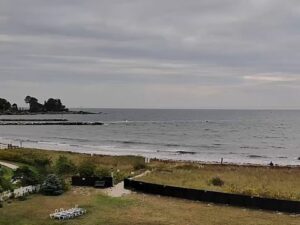



Barnegat Light, Long Beach Island, New Jersey, USA
20.6°C / 69.1°F
18:32

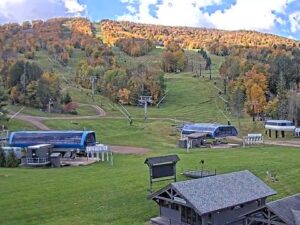
Windham Mountain, Resort Drive, Windham, NY, USA
 13.1°C / 55.6°F
18:32
13.1°C / 55.6°F
18:32
The Lock and Dam 15 Webcam looks over the downstream end of the locks on the Mississippi River at Rock Island, Illinois, where the river runs between Arsenal Island and Davenport, Iowa. The black steel truss of the Government Bridge crosses the middle of the frame, with a small cabin perched on top of its swing span. That span turns open each time a towboat and its barges pass through the lock, then closes again for the trains and cars that use the bridge. In the foreground sit the lock gate walkways, the concrete lock walls and the brown water of the chamber, with lawn and trees on the left. Lock staff in high-visibility vests can appear out on the wall. The scene follows the river traffic: an empty chamber one hour, a string of barges sliding past the bridge the next.
Lock and Dam 15 sits 483 miles (777 kilometers) above the point where the Mississippi meets the Ohio, in the middle of the Quad Cities. Work began in 1931 and the locks opened on March 7, 1934, as the first complex of the 9-Foot Channel Project. Its dam is the largest roller dam in the world, 367 meters (1,203 feet) long and made up entirely of roller gates: nine non-overflow gates and two overflow gates, each spanning 33 meters (109 feet). The dam is also unusual for running at an angle to the current rather than straight across it, and for having a complete auxiliary lock beside the main one. The main chamber measures 33.5 by 183 meters (110 by 600 feet), the auxiliary chamber 33.5 by 110 meters (110 by 360 feet). The complex joined the National Register of Historic Places in 2004.
The Government Bridge, also known as the Arsenal Bridge, opened in 1896 and was designed by Ralph Modjeski. Trains use its upper deck and road traffic its lower deck. It stretches 490 meters (1,608 feet) in all, and the swing span on camera is 111 meters (365 feet) long by itself. An earlier Government Bridge had crossed the river here in 1872.
The lock rests against Arsenal Island, 383 hectares (946 acres) of land in the river between Davenport and Rock Island. Congress established the Rock Island Arsenal there in 1862, and it is still an active Army installation. The island’s Clock Tower Building, erected in 1867, still serves as offices for the U.S. Army Corps of Engineers, whose Rock Island District runs both the locks and this camera.
At Quad City International Airport in nearby Moline, January averages highs of about 0 C (32 F) and lows near minus 10 C (15 F), and around 92 centimeters (36 inches) of snow falls in a typical year. In winter the Lock and Dam 15 Webcam can show snow along the walls and walkways, with ice forming on the river in hard cold spells. April warms to highs near 17 C (63 F), with lows around 4 C (40 F). Yearly precipitation comes to about 972 millimeters (38 inches).
July is the warmest month, with highs around 30 C (86 F) and nights near 18 C (65 F). That is when the trees at the left of the frame are in full leaf. October cools to highs near 18 C (65 F) and lows around 6 C (43 F), and the leaves beside the lock change color as the month goes on.
The Mississippi River Visitor Center stands right at the locks on Arsenal Island. Its observation deck looks down on the chambers, which makes it the place to watch a tow lock through in person, and staff run tours of the locks and dam along with a seasonal Bald Eagle and Clock Tower tour. Rock Island Arsenal is an active military installation, so every visitor needs a background check and a pass before driving onto the island. Once there, the Rock Island Arsenal Museum, founded on July 4, 1905, is the second oldest U.S. Army museum after the West Point Museum. The Colonel Davenport House dates from 1833, and the island’s Confederate Cemetery and Rock Island National Cemetery hold the graves of 1,964 Confederate prisoners and 125 Union guards.
Across the river in Davenport, the Figge Art Museum at 225 West 2nd Street is open Tuesday through Sunday, and admission is free on Thursday evenings from 5 to 8 pm. For a view of the river from the water, the Channel Cat Water Taxi is a Quad Cities summer fixture. In 2026 it runs daily through the end of September and on weekends into mid-October, weather permitting. Tickets are sold on board, cash only, or online.
These cameras cover more of the Mississippi in Iowa and two other famous sets of locks.
It spans the Mississippi River between Rock Island, Illinois and Davenport, Iowa, beside Arsenal Island in the Quad Cities. The locks sit on the Illinois side, 483 miles (777 kilometers) upstream of the Ohio River confluence.
The camera watches the downstream end of the locks: the lock gates and walkways in front, the chamber and its concrete walls, and the Government Bridge with its swing span across the middle of the view. Towboats pushing barges pass through, and the swing span opens for each one.
Its 111 meter (365 foot) swing span crosses the path of vessels using the lock, so it opens and closes each time a tow passes through. While it is open, trains on the upper deck and cars on the lower deck wait for it to swing back.
Yes. Its 367 meter (1,203 foot) dam is built entirely of roller gates, eleven of them, each spanning 33 meters (109 feet), and it is the largest roller dam anywhere.
Construction started in 1931 and the locks opened on March 7, 1934. It was the first complex of the 9-Foot Channel Project and was listed on the National Register of Historic Places in 2004.
Yes, through the Mississippi River Visitor Center on Arsenal Island, which has an observation deck over the locks and offers tours. Because Rock Island Arsenal is an active military base, visitors need a background check and an access pass first.
Winters are cold, with January highs near 0 C (32 F) and about 92 centimeters (36 inches) of snow a year. Summers are warm, with July highs around 30 C (86 F). Spring and fall sit in between, with highs of 17 to 18 C (63 to 65 F) in April and October.
Source: USACE Rock Island District
The best new live webcams and site features, once a week.
By subscribing you agree to receive our weekly email. Unsubscribe any time.
 16.7°C / 62.1°F
 17.3°C / 63.1°F
 23.6°C / 74.5°F