
 English
 简体中文
 Deutsch
 Français
 Español
 Nederlands
 Svenska
 Italiano
 日本語
 Polski
 Português
 Русский
 Ελληνικά
 العربية
 Türkçe

Live
Bloubergstrand Beach, Cape Town, South Africa
Bloubergstrand Beach, Marine Drive, Cape Town, South Africa
 17.9°C / 64.2°F
 01:5201:52:28
 23.1°C / 73.6°FClear Sky
 42%
 5 km/h / 3 mph
 05:17
 18:32
Loading forecast…
Bloubergstrand Beach, Marine Drive, Cape Town, South Africa
17.9°C / 64.2°F
01:52


Paarl Golf Club, Wemmershoek Road, Boschenmeer Golf Estate, Paarl, South Africa
 14.6°C / 58.3°F
01:52

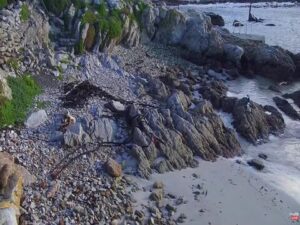
Stony Point Nature Reserve, Wallers Road, Betty's Bay, South Africa
 17.7°C / 63.9°F
01:52
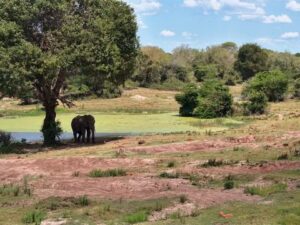
Tembe Elephant Park, KwaZulu-Natal, South Africa
18°C / 64.4°F
01:52
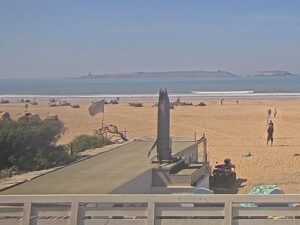
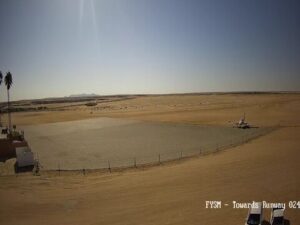
Swakopmund Municipal Aerodrome, Swakopmund, Namibia
16.2°C / 61.2°F
01:52


The Kwa Maritane Webcam looks across the hide waterhole at Kwa Maritane Bush Lodge, on the southern side of Pilanesberg National Park in South Africa’s North West province. The camera sits low, close to the waterline, so the shallow, muddy pan fills the foreground, with a bare sandy clearing behind it where animals walk in out of thick bush. Beyond the trees, a rocky hillside covered in scrub rises to the skyline, part of the ring of hills left by an ancient volcano. Elephants, white rhinos, lions and wildebeest have all been recorded drinking at the lodge’s waterholes, and baboons are regular visitors. Nothing is scheduled, so the pan can sit empty for long spells and then fill with a herd within minutes. The stream is run by Africam and stays on after dark.
Kwa Maritane means “Place of the Rock”, a name taken from the hills around the lodge, which were shaped by the Pilanesberg’s old alkaline volcano. The lodge sits inside the park, about 3 kilometers (1.9 miles) from Pilanesberg International Airport and 7 to 8 kilometers (4 to 5 miles) by road from Sun City, and terrain data puts the camera site at roughly 1,120 meters (3,675 feet) above sea level. It has two waterholes. One lies in front of the restaurant and is watched from the veranda and terrace. The other, the one on this camera, is overlooked by an underground hide reached through a 180-meter (591-foot) tunnel from inside the lodge grounds. The lodge also sends a camera feed of the hide waterhole to the televisions in its rooms.
Pilanesberg National Park covers 572 square kilometers (221 square miles) and is built on the Pilanesberg Alkaline Ring Complex, the root zone of a volcano that went extinct about 1.25 billion years ago. The rings of hills that make up the park climb to about 1,687 meters (5,535 feet) at their highest. A rehabilitation project began in 1979, and the park was proclaimed on 1 April 1984. During the early 1980s, Operation Genesis moved in around 6,000 animals of 22 species, described as the largest game resettlement in South Africa’s history. The park now holds the Big Five, more than 360 recorded bird species, and it lies in a malaria-free area.
Pilanesberg gets its rain in summer. From November to March, afternoons typically reach about 30°C (86°F), nights stay mild at 17 to 19°C (63 to 66°F), and thunderstorms bring most of the year’s rain, with December and January the wettest months. The bush around the pan grows dense and green, the grass thickens, and a passing shower can leave drops on the camera lens. October is often the hottest month before the rains settle in, with highs near 31°C (88°F).
Winter, from June to August, is dry and sunny. Days reach about 21°C (70°F), clear nights can fall to around 3°C (37°F), and almost no rain falls for three months. The grass turns straw-colored and the bush thins out, which opens up the view around the waterhole and tends to draw animals to water they can rely on. April and May cool steadily from the summer heat, while spring warms fast: by September, afternoons are back near 30°C (86°F) even though the veld is still dry.
A game drive is the main event. Pilanesberg has three main tarred routes, and Mankwe Dam, the park’s large artificial lake, is a natural place to stop and scan the shoreline. At the lodge itself, the tunnel to the hide and the terrace above the restaurant waterhole give two angles on the same visitors. The hill in front of the lodge is worth a look with binoculars too, since baboons and klipspringer use it and a leopard turns up there now and then.
Sun City borders the park to the south, 7 to 8 kilometers (4 to 5 miles) by road from the lodge. The resort opened on 7 December 1979 and includes the Palace of the Lost City, the Valley of the Waves water park, a casino and the Superbowl Arena. Golfers have two 18-hole courses designed by Gary Player: the Lost City Golf Course and the Gary Player Country Club, which hosts the annual Nedbank Golf Challenge. Pilanesberg International Airport is about 3 kilometers (1.9 miles) away, and Johannesburg is around 175 kilometers (109 miles) southeast, roughly two hours by car.
For more African waterholes on live cameras, try these.
A small, shallow waterhole seen from close to water level, with a sandy clearing behind it, dense bush on both sides and a rocky hillside rising beyond the trees. Animals cross the clearing to drink. The camera watches the pan beside the lodge’s underground hide, not the lodge buildings or the restaurant waterhole.
Inside Pilanesberg National Park in North West province, South Africa, on the southern side of the park between Sun City and Pilanesberg International Airport. Johannesburg is about 175 kilometers (109 miles) to the southeast, around two hours by road.
This camera is one, but it covers a single waterhole. The Kwa Maritane Webcam is fixed on the hide pan at a lodge on the park’s southern side, so it does not show Mankwe Dam, the park’s game drive routes or Sun City.
Elephants, white rhinos, lions, wildebeest, baboons and water mongooses have all been recorded at the lodge’s waterholes, and lions have been seen drinking at the hide by day and by night. Pilanesberg holds all of the Big Five, so buffalo and leopard live in the park too, although no sighting on camera is ever certain.
Yes. The stream stays on after dark, and the hide waterhole is floodlit, so animals that come to drink at night can still be picked out. Lions in particular have been seen there after sunset.
Hot, wet summers and dry, mild winters. December and January afternoons average about 30°C (86°F) with frequent thunderstorms, while June and July days reach about 21°C (70°F) and nights can drop to around 3°C (37°F). Almost all the rain falls between November and March.
Through a 180-meter (591-foot) tunnel that starts inside the lodge grounds, just past the restaurant, and ends in an underground hide beside the waterhole on this camera.
Yes. Pilanesberg National Park was proclaimed on 1 April 1984 and is run by the North West Parks and Tourism Board. It is home to the Big Five.
Source: Africam
The best new live webcams and site features, once a week.
By subscribing you agree to receive our weekly email. Unsubscribe any time.
 19.1°C / 66.4°F
 26.7°C / 80.1°F