Live
Stork Nest, Usti nad Orlici, Czech Republic
Hylvaty, Usti nad Orlici, Czech Republic
 9.5°C / 49.1°F
 17:50
 17:50:37
 9.1°C / 48.4°FOvercast Clouds
 99%
 6 km/h / 4 mph
 07:36
 17:59
Loading forecast…
Hylvaty, Usti nad Orlici, Czech Republic
9.5°C / 49.1°F
17:50

CPA Delfín - Zimní stadion, Lipová, Uhersky Brod, Czechia
 11.9°C / 53.4°F
17:50

Paprsek, Velke Vrbno, Olomouc Region, Czech Republic
5.9°C / 42.6°F
17:50
Ceske Petrovice, Eagle Mountains, Czech Republic
7.9°C / 46.2°F
17:50
Lomnice nad Popelkou, Liberec Region, Czechia
 10.7°C / 51.3°F
17:50


Buckfastleigh Station, Devon, United Kingdom
 11.3°C / 52.3°F
16:50



Hohe Rheinstraße 28, 46459 Rees, Germany
 12.1°C / 53.8°F
17:50
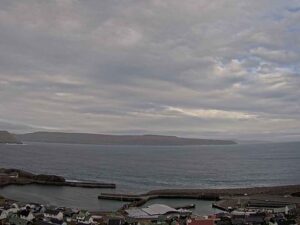

The Makov Webcam looks into a woodland bird feeder at the Makov wildlife rescue station, set in spruce forest near Cizova in South Bohemia, about 7 kilometers (4.4 miles) northwest of Pisek in the Czech Republic. Seed tubes and dried sunflower and teasel heads hang from the branches, apples and rowan berries line a log in the foreground, and a small roofed hay rack stands in the clearing behind. Tree sparrows and great tits come and go through the day, and red squirrels can turn up at the feeder too. The station runs two more cameras, both in the player’s tabs: a white stork nest above a grassy glade, and the pond inside the rescue enclosures, where ducks and a swan share the water.
The Czech Union for Nature Conservation (CSOP) set up the Makov station in 1993 to care for wild animals found injured, sick, exhausted or orphaned. It sits at a forest gamekeeper’s lodge at Makov, in the municipality of Cizova, at about 426 meters (1,398 feet) above sea level. The grounds cover about 4,000 square meters (43,000 square feet) and hold 35 aviaries, split into three parts: a section open to visitors, a treatment section, and a quiet section where animals are readied for release back into the wild.
Patients range from otters and hedgehogs to kestrels and storks. A profile of the station on the Czech news site CzechCrunch reported more than 1,000 animals in its care in a single year, and tens of thousands since it opened. Storks are a long-running speciality, white and black alike, and the station’s head has built a large following in the Czech Republic by sharing rescue stories online as the gamekeeper of Makov.
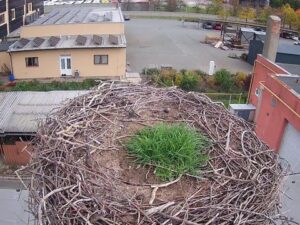
Each camera shows a different side of the place. The feeder is wild ground, visited by birds from the surrounding forest. The pond camera looks along a stone-edged pool past a row of timber aviaries with mesh roofs, where mallards and other ducks rest on the bank and a swan patrols the lawn. The stork camera looks across a grassy glade with a nest of woven sticks in the foreground. White storks leave central Europe for Africa in late summer, a journey traced on our bird migration map, so outside the nesting season the nest often stands empty, as it did in mid-October.
Makov has an inland central European climate, cold in winter and warm in summer. January is the coldest month, with average highs of about 2 C (36 F) and lows near -4 C (25 F), so frost on the feeder log and the pond’s edge is common. Feeders in central Europe usually draw the most birds in winter, when natural food runs short, which makes the colder months a good time to watch the Makov Webcam. Spring warms quickly, with April highs of about 14 C (57 F) and May highs near 18 C (64 F), and the storks return to their nests in spring.
July and August are the warmest months, with average highs of about 23 C (73 F) and lows around 14 C (57 F). Autumn cools steadily, from about 19 C (66 F) in September to 14 C (57 F) in October and 7 C (45 F) in November. By mid-October fallen leaves already dot the lawn on the stork camera.
The rescue station itself opens to the public from March to October, on Wednesdays and Saturdays from 9 am to 5 pm, and school groups can book visits on other weekdays in season. Visitors walk through the public section of the aviaries, while the treatment and pre-release sections are kept apart.
Pisek, 7 kilometers (4.4 miles) to the southeast, is a royal town founded in 1254 on the Otava River, with about 31,000 inhabitants. Its Stone Bridge, probably built in the third quarter of the 13th century, is the oldest preserved early Gothic bridge in the Czech Republic and has been a national cultural monument since 1998. Locals call it the Old Bridge, and legend names it the Stag Bridge after the first creature said to have crossed it.
Zvikov Castle, about 11 kilometers (6.6 miles) to the northeast, stands on a steep promontory above the confluence of the Vltava and Otava rivers. Often called the king of Czech castles, it dates from the first half of the 13th century, and its first written mention comes from 1234.
Another Czech stork nest, a German stork nest and an English woodland feeder make good next stops.
The station is at Makov, in the municipality of Cizova in the Pisek district of South Bohemia, Czech Republic. It lies in forest about 7 kilometers (4.4 miles) northwest of Pisek and about 83 kilometers (52 miles) south of Prague in a straight line.
The main camera shows the forest feeder: hanging seed tubes, dried sunflower and teasel heads, apples and rowan berries on a log, and a roofed hay rack in the clearing. Tree sparrows and great tits are frequent visitors, and red squirrels can appear too. The tabs add the white stork nest above a grassy glade and the pond among the timber aviaries, with ducks and a swan.
No. This camera is at a wildlife rescue station in South Bohemia, Czech Republic, and shows no slopes or lifts. The ski area belongs to a different Makov, a village in the Kysuce region of northwest Slovakia, where the Kasarne Javorniky slopes run between 905 and 1,070 meters (2,969 and 3,510 feet).
Yes, on the Stork Nest tab. White storks use the nest in the breeding season, from spring into summer, then leave to winter in Africa, so from autumn to early spring the nest is usually empty. The station has cared for injured white and black storks for about 25 years.
Winters are cold, with January highs around 2 C (36 F) and lows near -4 C (25 F). Summers are warm, with July and August highs of about 23 C (73 F). Spring and autumn are mild, with April and October highs of about 14 C (57 F).
Yes. The station opens to the public from March to October on Wednesdays and Saturdays, 9 am to 5 pm, and closes to visitors from November to February. School groups can book visits on other weekdays in season.
Injured, sick, exhausted and orphaned wild animals from the region, including otters, hedgehogs, kestrels and white and black storks. The aim is to return each one to the wild, and the station has handled more than 1,000 animals in a single year.
Source: Makov Wildlife Rescue Station
The best new live webcams and site features, once a week.
By subscribing you agree to receive our weekly email. Unsubscribe any time.
 10.1°C / 50.2°F
 10.2°C / 50.4°F