
Live
Colorado College, Colorado Springs
Colorado College, East Cache La Poudre Street, Colorado Springs, CO, USA
 7.6°C / 45.7°F
 16:41
16:41
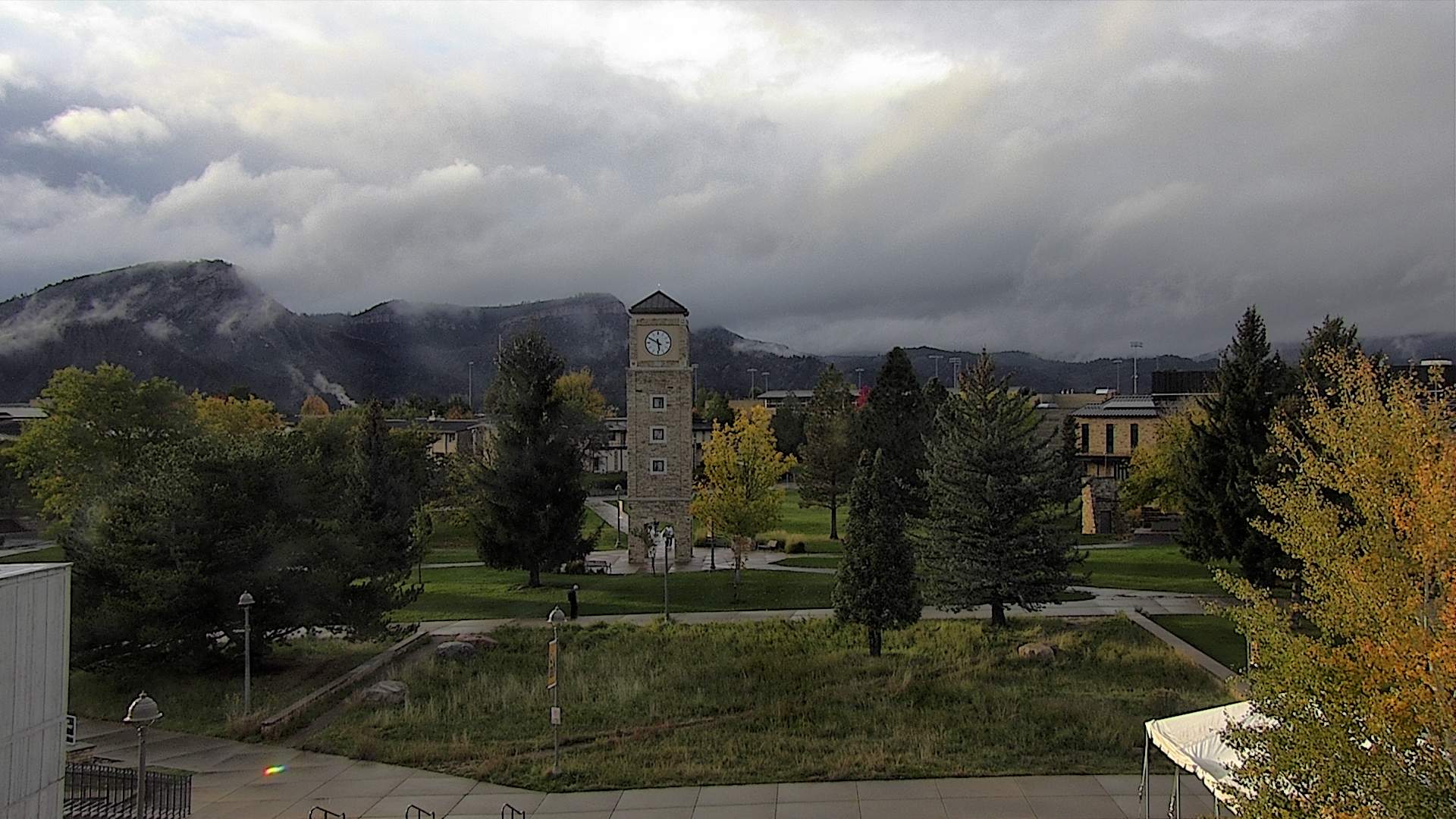
Stream hours: These are still cameras: Fort Lewis College takes a new picture every few seconds, and the player above reloads it every 10 seconds.
16:41:20 7.1°C / 44.8°FBroken Clouds
 74%
74% 14 km/h / 9 mph
 07:18
07:18 18:36
18:36Loading forecast…
Colorado College, East Cache La Poudre Street, Colorado Springs, CO, USA
7.6°C / 45.7°F
16:41
Steamboat Ski Resort, Steamboat Springs, Colorado, USA
 1°C / 33.8°F
16:41
1°C / 33.8°F
16:41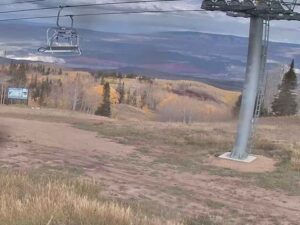
Sunlight Mountain, Garfield County, Colorado, USA
 -0.8°C / 30.6°F
16:41
-0.8°C / 30.6°F
16:41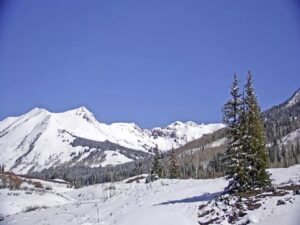
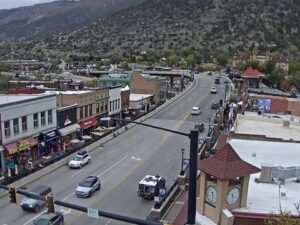
Grand Avenue, Glenwood Springs, Colorado, USA
 5.9°C / 42.6°F
16:41
5.9°C / 42.6°F
16:41
Glacier Club, San Juan Mountains, Colorado, USA
5.8°C / 42.4°F
16:41



The Fort Lewis College Webcam looks west from the Student Union across the central lawn of the college’s hilltop campus in Durango, Colorado, with the stone clock tower standing in the middle of the frame. Tall spruces and pines frame the quad, aspens and cottonwoods add yellow in autumn, and students cross the paved walks below. Beyond the low stone buildings, a line of dark, cliff-banded mountains closes the horizon, and the cloud over them changes the whole picture from hour to hour. Two more college cameras sit in the tabs above the player. One looks down from the rim of the mesa over the brick blocks of downtown Durango and the Animas Valley, and the other looks northeast from Chemistry Hall across a wooded courtyard toward the forested ridges beyond the campus.
Fort Lewis College sits on a mesa on the eastern edge of Durango, about 110 meters (350 feet) above downtown, on land that was once the Durango Municipal Airport. The college moved up here in 1956, and the Boulder architect James Hunter drew the master plan and designed its first buildings, among them McPherson Chapel, finished in 1959. The campus covers 100 hectares (247 acres) and enrolled 3,544 students in fall 2024. It has granted bachelor’s degrees since 1963, and its teams, the Skyhawks, play in the NCAA Division II Rocky Mountain Athletic Conference.
The name is older than the campus. Fort Lewis began as an Army post, built at Pagosa Springs in 1878 and moved in 1880 to a site on the La Plata River south of Hesperus. The soldiers left in 1891, the post became an Indian boarding school run by the Department of the Interior, and in 1911 it was given to the state of Colorado as a high school of agriculture and teacher training. College courses arrived in 1927, the high school classes ended in 1933, and from 1949 the school was known as Fort Lewis A&M College.
That 1911 transfer came with a condition that still shapes the college. The deed required the land to be kept as a school where Indian students would be admitted free of tuition, and today Fort Lewis College waives tuition for qualified members of Native American tribes and Alaska Native villages. Durango itself was founded in 1880 by the Denver and Rio Grande Railroad and named by former Colorado governor Alexander C. Hunt after Durango, Mexico. The town had 19,071 residents at the 2020 census, and the downtown tab shows its commercial blocks and houses spread across the valley floor below the campus.
Downtown Durango sits at 1,991 meters (6,532 feet), and the campus is higher again, so winters are properly cold. January averages a high of 4 C (39 F) and a low of minus 11 C (13 F), and the town collects about 162 centimeters (64 inches) of snow in a typical year. Winter storms can leave the quad white and the evergreens weighed down with snow. Spring warms slowly: April highs reach 17 C (63 F), but nights still dip to around minus 1 C (30 F).
Summer is warm by day and cool at night, with July averaging 29 C (85 F) in the afternoon and 12 C (53 F) before dawn. Total precipitation is modest at 498 millimeters (19.6 inches) a year. October is the month the Fort Lewis College Webcam shows at its best: highs of about 18 C (64 F), cold nights near 1 C (33 F), and the aspens and cottonwoods on campus and down in the valley turning yellow against the dark conifers. These figures are the 1991 to 2020 NOAA averages for Durango.
On campus, the Center of Southwest Studies runs a museum gallery and the Delaney Research Library and Archives, both devoted to the history and cultures of the region. The gallery is open on weekdays from 9 am to 4 pm. Down the hill in town, the Durango and Silverton Narrow Gauge Railroad runs historic Denver and Rio Grande Western steam locomotives on the old branch line to Silverton. The trip covers 72 kilometers (45 miles) and takes about three and a half hours each way, so the full round trip fills a day of around eight hours. The paved Animas River Trail follows the river through town for 11 kilometers (7 miles) and is open to walkers, runners, cyclists and horse riders.
Mesa Verde National Park lies about 56 kilometers (35 miles) west of Durango. The drive to the park entrance takes about 45 minutes, and reaching the cliff dwellings on the mesa top takes closer to an hour and a half. Purgatory Resort is about half an hour’s drive from town, with skiing in winter and a bike park once the snow has gone.
For another Colorado campus, the town where the first Fort Lewis was built, and more of the San Juan country, try these next.
Fort Lewis College is in Durango, in La Plata County in southwest Colorado. The campus sits on a mesa on the eastern edge of town, about 110 meters (350 feet) above downtown, at 1000 Rim Drive.
The main camera looks west from the Student Union over the central lawn and clock tower, with mountains on the skyline. The tabs add a view over downtown Durango and the Animas Valley from the rim of the mesa, and a view northeast from Chemistry Hall across a tree-lined courtyard and its footpaths.
Yes. The Downtown Durango tab on this page is one of the college’s own cameras. It looks out from the campus mesa over the town’s commercial blocks and houses to the mountains on the far side of the valley.
Durango has cold, snowy winters and warm summers with cool nights. January averages 4 C (39 F) by day and minus 11 C (13 F) at night, July 29 C (85 F) and 12 C (53 F), and about 162 centimeters (64 inches) of snow falls in a typical year.
The campus sits about 110 meters (350 feet) above downtown Durango, which itself lies at 1,991 meters (6,532 feet). That drop gives the downtown camera its view over the rooftops.
The college moved to its present campus in 1956, onto the site of Durango’s former municipal airport. Before that it occupied the old Fort Lewis Army post on the La Plata River south of Hesperus.
Mesa Verde National Park is about 56 kilometers (35 miles) west of Durango, roughly 45 minutes by car to the entrance and about an hour and a half to the cliff dwellings on the mesa top.
Source: Fort Lewis College
The best new live webcams and site features, once a week.
By subscribing you agree to receive our weekly email. Unsubscribe any time.
 9.2°C / 48.6°F
 8°C / 46.4°F